
Concord Theatricals is proud to support Play Club, a national book club with a twist. Here, Play Club founder Amy Wheeler shares the inspiring story of the club’s genesis and celebrates the unifying power of reading plays as a community. Plus, scroll down to check out Play Club’s special discount offer for Breaking Character readers!
GATHERING AROUND STORIES
GATHERING AROUND STORIES
How reading plays together sparked Play Club, a national book club with a theatrical twist
By Amy Wheeler
The Loneliness Epidemic
We’re told we’re living through a “loneliness epidemic” – such a cold, clinical phrase to describe the human experience, don’t you think?
Loneliness doesn’t feel like an epidemic. It feels like the blue light of a phone screen at 11PM. It’s that hollow, slightly addictive habit of scrolling through a feed of “friends” until your eyes are bleary – only to realize you haven’t spoken an audible word to another human for hours.
Sure, we’re all technically “connected.” We have the pings and the DMs and the little red notification bubbles that tell us we have 47 unread emails.
But those are just ghosts of connection.
They don’t have a laugh that snorts when things get really funny. They don’t offer that collective exhale you feel when you’re in a room where everyone suddenly relaxes together.
Theatre offers a different kind of connection.
Why Theatre Matters
For a few hours in a dark room, strangers experience a living story in the same space. We breathe together. Our hearts sync, and we are reminded of who we are to each other.
I’ve known this truth my whole life as a theatre maker – and as an audience member. There’s nothing like the expectation of that moment the lights go down and the curtain rises. Except for the moment the lights come up and you head to a neighborhood bar with friends to argue and laugh and revel in how the play provoked and inspired you.
The creation of a play is alchemy: dreamed onto the page by a playwright, sparked to life by collaborators, then shared in a roomful of people ready to suspend their disbelief. The trust an audience member extends to an artist in that moment is where the play takes flight.
Plays ignite empathy. They connect us across difference – especially crucial at a time when powerful forces are trying to pull us apart.
That belief – and my deep impulse to connect – is what gave birth to Play Club.
The Seed of an Idea
During the pandemic lockdown, I sat alone at my desk writing plays, feeling what many of you likely felt too: isolation, fear for my family’s health, anxiety about the future – and worry for an art form that depends on people gathering in person.
Then the seed of an idea appeared: What if we built community by reading and talking about plays? As a playwright and educator, I know that plays are a wholly unique art form that is both literary and live.
Like wildfires that scorch the landscape while simultaneously creating the conditions for new growth, the pandemic began to feel like an unexpected opening. Even amid uncertainty, perhaps something beautiful could take root.
I started small, inviting friends to read and talk about plays with me.
That experiment generated such good energy, I piloted a first Play Club roster, choosing four favorite plays by my friends Sarah Ruhl, Lynn Nottage, Ellen McLaughlin and Eisa Davis. Friends invited friends, and more than 100 people signed up from across the country, joining book club-like discussions hosted by me, and culminating in a lively monthly Conversation and Q&A with the Playwright.
We created a happy hour vibe to liven up our Zooms – with specialty cocktails/mocktails and a rocking playlist inspired by the featured play’s themes – concocted by our in-house barkeep and deejay RK Buzard.
Deep diving into the plays, then hearing these four rock stars share candid stories about how the plays were born, ignited a fire. Word spread quickly, and within months, 350+ people from 18 to 85 were reading a play each month – 12 featured plays a year, curated by me – and gathering around our virtual campfire to talk about them together, and with the playwrights.
Something unexpected began to happen.
A Community Takes Root
“It’s so remarkable that Amy Wheeler is building community around the sacred but sometimes overlooked act of reading a play. In a time when we are starved of community, this is a wonderful way to build fellowship.” – Sarah Ruhl
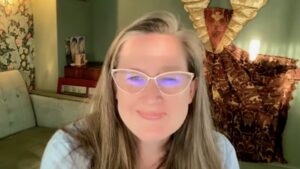
Sarah Ruhl joins our very first Zoom from her Brooklyn writing space. [credit: Amy Wheeler]
As connections grew, a mycelium-like network of theatre lovers – passionate patrons, artists, students, educators and curious readers – began to emerge. The plays sparked conversations about our lives: things that keep us awake at night, challenges we face, what makes us laugh.
And something else happened, too.
We started to play. In a world that often casts us as workers or consumers, we “broke character” and rediscovered the simple joy of showing up as ourselves and sharing our stories.
One of the things I love most about Play Club is that it returns us to the play itself.
Before a production, before reviews, before box office numbers – there is simply a script: hatched in the playwright’s imagination and poised to come alive in the reader’s minds.
Reading a play gets us inside the creative process: we hear the playwright’s wheels turning, see the world through their eyes.
Thanks to the remarkable ecosystem of playwrights, theatres and publishers who champion new work and circulate plays into the world, those stories can travel far beyond the stage. We now happily partner with Concord, the National New Play Network and the Playwright’s Center to spotlight celebrated writers and exciting emerging talent.
From Zoom to The Room Where It Happens
When the world reopened, Play Club branched out of Zoom and into theatres. People who had spent months talking together online were hugging in person. The energy was electric.
In 2023-24 we hit the road, following the tour of Lauren Yee’s high-voltage Cambodian Rock Band gorgeously directed by Chay Yew – from Arena Stage to Berkeley Repertory Theatre to the ACT Theatre and 5th Avenue Theatre co-production in Seattle – celebrating each stop with post-show drinks with the cast and creative team.
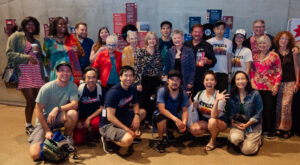
Play Club parties with the touring cast of Lauren Yee’s Cambodian Rock Band at Arena Stage. [credit: Tracey Salazar Photography]
Now we are a 100% hybrid: exploring plays via Zoom, meeting up to see shows at theatres across the country, and building a fan base for playwrights. Box offices are delighted to sell group tickets, and our post-show happy hours keep their lobby bars buzzing.
What started as a seed is growing into a tree, with roots deep in creative soil and branches stretching coast to coast.
From New York to Minneapolis, from Sheboygan to Nashville, from San Francisco to Anchorage, our members are sharing their own writing, going to see plays at their local theatres, and collaborating in festivals and productions.
Our story is still unfolding—and gaining momentum.
The Future of Theatre Audiences
What excites me now is what this community might mean for the future of theatre.
At a time when the field is asking how to cultivate new audiences for contemporary plays, we have an answer: invite them into the playwright’s process.
When people deep dive into plays together and connect with the originating artist’s voice and vision, they become even more curious about what directors and designers and actors do to bring the playwright’s vision to life.
They show up at the theatre invested in the story they’re about to experience, rooted in the knowledge of how it came to be. Some of even inspired to start writing their own plays.
New York-area playwright and member Sharon Mosley, an early joiner who’s gone from a quiet, humble “…I write plays…” to confidently proclaiming, “I am a playwright!”– with numerous production credits now under her belt – describes it beautifully:
“Play Club is like this gift I didn’t know I needed. Have you ever encountered something that makes you exhale and say this is it – this is home? That’s how I feel about this community.” – Sharon Mosley, playwright & member
The Warmth of our Campfire
In a fragmented world, Play Club is an invitation to gather around a story.
“If you’re wondering if Play Club is for you, the answer’s yes. Even if you’ve never read a play before? Yes. Even if Netflix is the closest you’ve ever come to seeing one. Reading and discussing plays is for everyone. Your experience as a human being is the only training you need.” – Molly Smith Metzler, featured playwright & television creator
Come join us, bring your dog-eared copy of the play, and enter a community of intellectually curious, playful, creative theatre lovers like you.
Explore the alchemy of an art form that is literary and live.
To learn about more about Play Club and all the benefits of becoming a member, go to theplayclub.org.
Upcoming Concord Theatricals playwrights and plays include:
- Carmen Rivera’s La Gringa (English Version)
- Jihae Park’s Peerless
- Jen Silverman’s The Roommate
- David Adjmi’s Stereophonic
- Lauren Gunderson’s Artemisia
- Lloyd Suh’s Charles Francis Chan Jr.’s Exotic Oriental Murder Mystery
- Quiara Alegría Hudes’ Elliot, A Soldier’s Fugue
- Lynn Nottage’s Ruined
Through the Play Club/Concord partnership initiative, Concord Theatricals generously offers a 30% discount on the featured plays they publish.
Special limited-time offer: Play Club is happy to offer readers of Concord’s Breaking Character blog a 20% off discount on an annual Play Club membership until December 31, 2026. To become a member, go to https://www.theplayclub.org/join and use the code PlayClubConcord.
Curious but not quite ready to jump in?
All good! Sign up as a free subscriber (on our homepage) to receive monthly e-news, and/or join our new live streaming series, “Play Club Presents,” for hosted conversations with celebrated playwrights about keeping a creative flow in these (r)evolutionary times.
2026-2027 Featured Playwrights: David Adjmi, Dipika Guha, Lauren Gunderson, Winnie Holzman, Quiara Alegría Hudes, Lavina Jadhwani, Wendy MacLeod, Lynn Nottage, Jihae Park, Jen Silverman, Crystal Skillman, DeLanna Studi, Lloyd Suh, and exciting emerging playwrights to be announced.
 Amy Wheeler is a playwright, theatre artist, educator, and Play Club’s founder. As producer of the renowned Hedgebrook Women Playwrights Festival for many years, Amy has participated in the development of new plays by hundreds of our most celebrated female-identified and non-binary playwrights. Amy’s work bridges playwriting and community-building, rooted in a lifelong belief in theatre’s power to connect us.

Thank You, Teachers
To honor the wonderful educators who motivate young theatre artists, Concord Theatricals authors thank their most inspiring teachers.
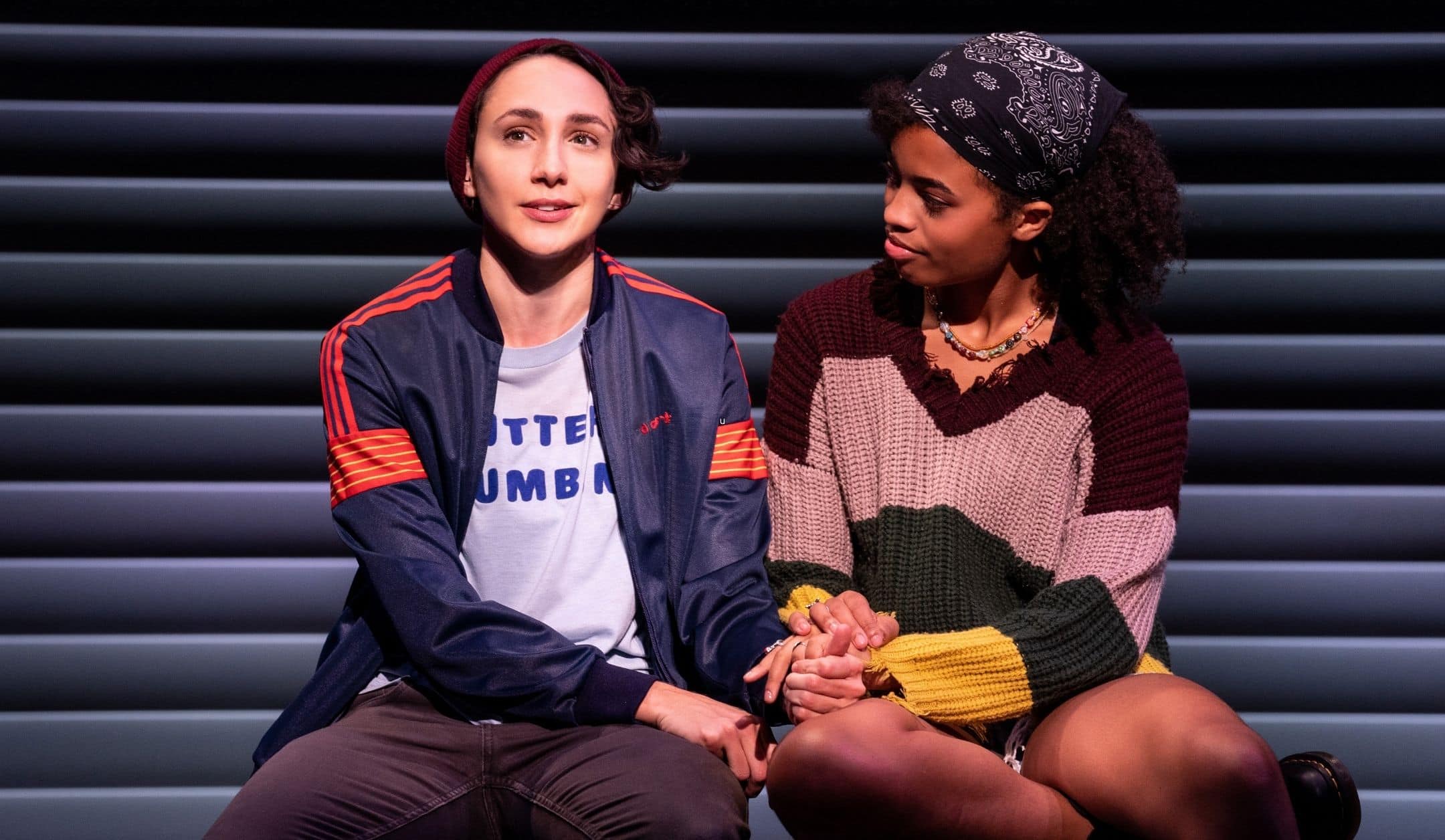
College Theatre: Consider These Plays & Musicals, Fall 2026
Choose your next show from this wide selection of plays and musicals for colleges and universities, including incisive political dramas, charming rom coms and cutting-edge musicals.

Jen Silverman in Five Plays
Explore award-winning playwright, novelist and screenwriter Jen Silverman’s range of writing through a selection of five of their plays below, each of which bring an interesting yet complex character, bold comedy or poignant theme to life.