
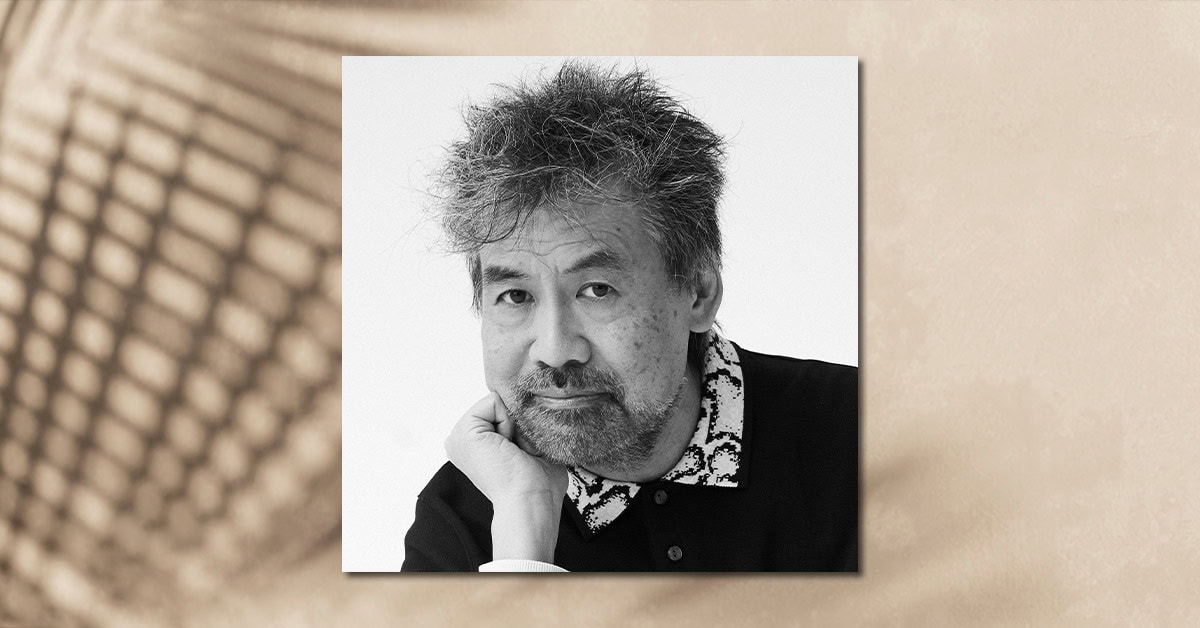
Celebrated for a body of work that examines race, cross-cultural boundaries and the construction of self-image with sharp wit and intellectual depth, David Henry Hwang is one of the most important figures in Asian American – and American – theatre. Often represented in his work by his fictional stand-in DHH, Hwang grew up in Los Angeles, California, before studying playwriting at Stanford University and the Yale School of Drama under such luminaries as Sam Shepard. Whether as himself or in the guise of DHH, Hwang’s work is characterized by a deep curiosity for the art of the story: how to create narrative, what it reveals about the psychological make-up of characters and which populations a given narrative benefits. Nominated three times for the Pulitzer Prize for Drama (for M. Butterfly, Yellow Face and Soft Power) and a Tony Award winner for M. Butterfly, Hwang has a decades-spanning body of work that has challenged and entranced audiences on- and off-Broadway.
To learn more about Hwang, dive into these five plays, which range from singular examinations of the complicated and shifting dynamics between the West and the East to re-workings of canonical entries from the history of American theatre. Though wildly different in subject matter, each exemplifies Hwang’s boundless talent and desire to center Asian voices across time and place.
FOB (1980) (US)
The premiere of FOB immediately positioned David Henry Hwang as an up-and-coming playwright of note – and marked the start of a productive and symbiotic creative relationship in which Joseph Papp produced Hwang’s first four plays. Debuting off-Broadway at the Joseph Papp Public Theater on June 8, 1980, FOB won Hwang the first of his multiple Obie Awards. It spoke with candor to Asian American issues and examined the shifting notions of race and upbringing that would continue to fascinate the playwright throughout his career.
Told in a style that moves quickly between myth and reality, with the characters occasionally speaking directly to the audience, FOB is immediate and vivid theatre. Grace and Dale are cousins, living in the Los Angeles area and attending college. Dale is fully American, a second generation immigrant. Grace is first generation and holds the customs of China in higher regard. The arrival of Steve, an exchange student and a newcomer from China fresh off the boat, forces them to confront a number of conflicting feelings about America, China and themselves. As emotions begin to run high, Dale becomes very confrontational with Steve, mocking his English and manner, all while Grace finds herself increasingly drawn to him.
M. Butterfly (1988) (US)
Bored with his routine posting in Beijing and awkward with women, René Gallimard, a French diplomat, is easy prey for the subtle, delicate charms of Song Liling, a Chinese opera star who personifies Gallimard’s fantasy of submissive, exotic, oriental sexuality. He begins an affair with “her” that lasts for 20 years, during which time he passes along diplomatic secrets – an act that brings about his downfall and imprisonment.
Arguably Hwang’s most-celebrated and influential work, M. Butterfly is a riveting psychological portrait that placed the playwright’s reputation among the highest in the American theatre. A deconstruction of the Puccini opera Madama Butterfly, Hwang’s work debuted on Broadway at the Eugene O’Neill Theatre on March 20, 1988 and played for nearly two full years. The production originally starred John Lithgow as the lovelorn René Gallimard and B.D. Wong as Chinese opera singer Song Liling and was critically-beloved, with The New Yorker referring to Hwang as “audacious, imaginative… gifted.” A deep journey into Western obsessions with Eastern bodies and customs, the play continues to be relevant and psychologically profound decades after its opening. It was later revived on Broadway in an equally highly-praised production in 2017 with an updated and modernized script once again written by Hwang.
Golden Child (1996) (US)
In the winter of 1918, progressive Chinese landowner Eng Tieng-Bin’s interest in Westernization and Christianity sets off a power struggle among his three wives, which eventually determines the future of his daughter, Ahn. Bringing religion, family and the desire to grow both spiritually and financially into sharp conflict with each other, Golden Child is another testament to playwright David Henry Hwang’s brilliance. Loosely based on Hwang’s Chinese great-grandfather’s own conversion to Christianity, Golden Child contains Hwang’s characteristic thematic fascinations: the shifting balance between East and West and the ties that bind us to our history and our ethnicity, along with the legacy we leave.
Golden Child continued Hwang’s series of critical successes across the 80s and 90s. The play won two Obie Awards (for Playwriting and for Tsai Chin’s performance) and its Broadway transfer was nominated for the 1998 Tony Award for Best Play. The New York Times described the play as showcasing Hwang’s “quiet though highly theatrical intelligence,” while the play’s reception further solidified Hwang as a playwright whose work was necessary viewing on whichever stage it appeared.
Rodgers & Hammerstein’s Flower Drum Song (Hwang Version) (2002) (US/UK)
“To create something new, we must first love what is old,” claims Mei-Li in David Henry Hwang’s adaptation of the Rodgers & Hammerstein jewel. The line of dialogue could stand in for Hwang’s whole artistic concept for reworking a classic of the American theatre. An adaptation clearly stemming from a place of deep love, Hwang took Rodgers & Hammerstein’s musical and brought it into the modern age, inspired by his own belief that the original was one of the only classic Broadway shows that featured a wide range (in both age and tone) of roles for Asian actors. Once again, visions of the old world and the new collided with theatrical flair on stage, with the resulting work being nominated for three 2002 Tony Awards – including Best Book of a Musical for Hwang.
Here, Mei-Li flees Mao’s communist China after the murder of her father and finds herself in San Francisco’s Chinatown. This naive young refugee is befriended by Wang, who is struggling to keep the Chinese opera tradition alive in spite of his son’s determination to turn the old opera house into a swingin’ Western-style nightclub. A unique blending of American razzmatazz and stylized Chinese opera traditions creates a beautifully theatrical tapestry. Mei-Li’s gradual assimilation is informed by her realization that the old and new can coexist when there is respect for both, much as in the creation of Rodgers & Hammerstein’s Flower Drum Song (Hwang Version).
Yellow Face (2007) (US)
Yellow Face exemplifies what makes David Henry Hwang’s plays special – their intensely smart examination of racial dynamics in modern America married with uproarious and expertly-crafted comedy. In this (very) unreliable memoir, Hwang looks back on the circumstances surrounding his earlier play Face Value, which closed during its Broadway previews in 1990. Here, Asian-American playwright DHH, fresh off his Tony Award win for M. Butterfly, leads a protest against the casting of Jonathan Pryce as the Eurasian pimp in the original Broadway production of Miss Saigon, condemning the practice as “yellow face.” His position soon comes back to haunt him when he mistakes a Caucasian actor, Marcus G. Dahlman, as mixed-race and casts him in the Asian leading role of his own Broadway-bound comedy (Face Value). When DHH discovers the truth of Marcus’ ethnicity, he tries to conceal his blunder to protect his reputation as an Asian American role model. Celebrated in both its original incarnation (the 2007 production won Hwang his third Obie) and the recent 2024 Broadway revival starring Daniel Dae Kim (nominate for three Tony Awards, including Best Revival of a Play), the play is a fascinating insight into acting, writing and narrative itself.
Blurring truth and fiction, Yellow Face finds Hwang reflecting on his own career trajectory and his position as an artist whose words have greater societal power in an unsparing manner. Hwang’s satire is not easily confined to punching up or punching down – rather, it understands that the shifting boundaries of race and the ways in which we interpret ourselves mean that our faces are always more complex than they appear.
Want more? Other plays by David Henry Hwang include:
- Bondage (US)
- Chinglish (US)
- Family Devotions (US)
- Peer Gynt (Muller, Hwang) (US)
- Rich Relations (US)
- The Dance and the Railroad (US)
- The House of Sleeping Beauties (US)
- The Sound of a Voice (US)
- Tibet Through the Red Box (US)
- Trying to Find Chinatown (US)
To discover more of David Henry Hwang’s (or DHH’s) thought-provoking and eye-opening work, explore the David Henry Hwang Collection in the US or UK.
Shows for Every Audience
Warm and inviting, these shows are an accessible way to experience the magic of live theatre. For any age and any background, they’re sure to delight audiences and give actors a chance to shine.

Thank You, Teachers
To honor the wonderful educators who motivate young theatre artists, Concord Theatricals authors thank their most inspiring teachers.
College Theatre: Consider These Plays & Musicals, Fall 2026
Choose your next show from this wide selection of plays and musicals for colleges and universities, including incisive political dramas, charming rom coms and cutting-edge musicals.