
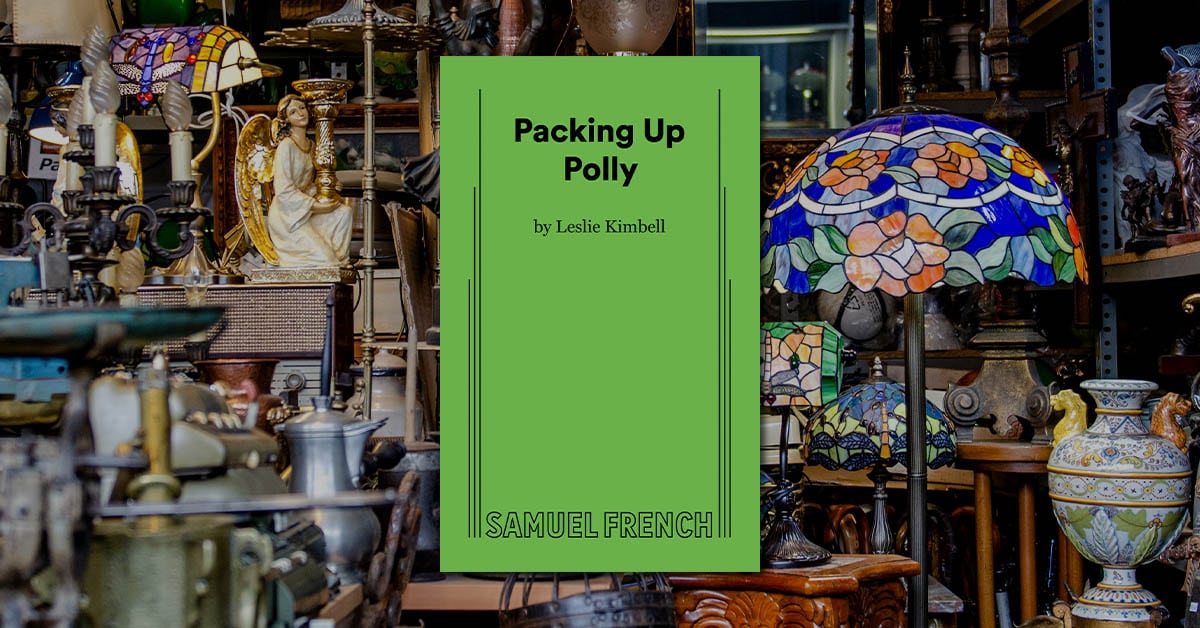
Playwright Leslie Kimbell, creator of the hugely successful “Four Old Broads” series – including Four Old Broads (US/UK), Four Old Broads on the High Seas (US/UK), The Miss Magnolia Senior Citizen Beauty Pageant (US/UK) and The Four Old Broads Christmas Extravaganza (US/UK) – explores deep layers of female friendship among a younger group of women in her dramatic comedy Packing Up Polly (US/UK). We sat down with the prolific and hilarious writer to discuss the play, grief, hoarding, and laughing until you cry.
For those unfamiliar with Packing Up Polly, tell us a bit about play.
Packing Up Polly is about four women of a certain age… old high school friends and co-cheerleaders, who come together to pack up the hoarded house of former 1970s gospel singer, Polly Porter. A roller coaster of emotions fly as they deal with the grief, drink pitchers of margaritas and let go of the past.
Your stage directions paint a visually striking picture of intense clutter with “a real feeling of being in the 70s,” though the show is set in 2015. What was your inspiration for the world of this play?
My dear mother, who I love with all my heart… is a hoarder of EPIC proportions. When I was writing the set description, I closed my eyes… pictured my mother’s dining room… and began to type. No… really. When my mother attended the premiere, she turned to me at intermission and said “Where in the world did you get the idea for this one?” I answered “They have popcorn at the concession stand.”
One beautiful theme in the script is the interplay of both humor and grief in the aftermath of loss. How do you balance those two elements in your writing?
I tried very hard to let the humor and grief co-exist peacefully… and let it play out naturally, as I have seen it happen in my own life at times of loss. I don’t use humor to undercut the grief… but to expose it… and heal it. I like for the audience to say ”Oh, that’s so funny… but also, ouch.” That’s where empathy lives.
“Right now… people don’t need perfect stories. They need real ones. This is one of them.”
The play’s characters have a deep sense of history with each other, which adds so much to the richness of their world. What was your process for developing their relationships, connections and backstories?
The ladies in Packing Up Polly were popular girls in high school. Leslie Kimbell was a HUGE, not popular, theatre nerd in high school… but I was very observant. I based these characters on stories I overheard in the cafeteria and in the halls, creating a world that I so wanted to be a part of… and am now… so thankful I wasn’t.
All of your work is consistently hilarious, and this play is no exception. Do you laugh out loud when you’re writing? Do you usually hit on “the funny” right away, or do you craft and finesse specific lines until you’re satisfied?
Thank you so much. I love to laugh and I love to hear an audience laugh. I have been known to work a line for DAYS… and test it out… you know, “workshop” it and change it in front of an audience during the run of a premiere, to see which one gets the better response. I am a little embarrassed to say that YES, I sometimes sit in front of my computer and laugh hysterically until I cry. Then I call a friend and tell them what I just wrote… and we laugh hysterically together. (Shhhh… don’t tell anyone.)
The play draws a thematic connection between holding onto physical objects and holding onto the past. What does this connection mean to you?
Hoarding tendencies are genetic… and so I have struggled myself with holding onto things. Writing this play was emotionally cleansing. For some, “things” can be a stand-in for memory, identity, safety or love. For some, letting go of “things” can feel like throwing away your memories or throwing away the love of the giver. I wanted to express how this effected Polly… and then, in small ways, had trickled down to Caroline too.
The characters of Lizzy and Caroline are especially affected by the fallout of attempting to appear perfect. It’s an issue that many people can identify with, especially in the digital age. How do their experiences reflect what you see in the world around you, and what can we learn from them?
Thank you for asking this. I think the most important thing I want people to take away – and learn from these characters – is that perfection is an illusion. Constantly trying to be perfect can prevent genuine connection and destroy relationships. Being authentic is not being weak… it gives us the strength to endure.
“Packing Up Polly doesn’t judge… it doesn’t shame. It simply shows real people trying to cope the best way they know how.”
Caroline speaks to her mother several times throughout the play and then gets a wonderful answer from beyond the grave. Did you know from the outset that you’d feature Polly’s voice in the action?
I didn’t. Her voice, and the surprise at the end, came to me late in writing the play… after a first reading with a group of actors. It was inspired by something my father said to me about a year before he passed.
One of my favorite lines, and a lesson the characters need to learn throughout the show, is that “it’s never too late to live happily ever after.” How do you live that lesson in your own life?
I try to live my happily ever through writing new stories and new characters. I also cherish every second of my happily ever after with my four – SOON TO BE FIVE – grandchildren.
In many ways, now is the ideal time to present a show like Packing Up Polly. Why do you think this is the right time for theatres to produce the show?
So many people are exhausted from trying to look like they have it all together. I know I was. We live in a world where everyone seems fine on the outside… but underneath, a lot of people are struggling… with grief, anxiety, clutter… and the need to keep up appearances. Packing Up Polly speaks directly to that. It shows what happens when we hold onto things… not just objects, but memories, expectations… because letting go feels too hard. Packing Up Polly doesn’t judge… it doesn’t shame. It simply shows real people trying to cope the best way they know how. As the women begin facing the mess around them, they also begin facing the old wounds they’ve carried from relationships lost… beloved friendships strained, broken promises, words left unsaid. In doing so, they start to heal, not by fixing everything, but by finally telling the truth. And I do all of this with humor. Audiences need to laugh. They need to recognize themselves onstage and feel less alone. Packing Up Polly tells the truth in a way that is honest, warm, and relatable. Right now… people don’t need perfect stories. They need real ones. This is one of them.
What do you hope audiences will take away from Packing Up Polly?
I hope audiences leave recognizing that authenticity is braver than perfection… and that the pressure to appear “put together” can quietly dismantle us. Packing Up Polly invites us to understand that grief doesn’t just live in funerals… it lives in closets, in boxes, in the objects we cling to because they hold memory, safety and identity. I hope it gently reveals that silence in families and around shame or mental health can be deafening… and that avoidance can wound as deeply as harsh words. I want people to laugh and affirm that humor is not disrespectful to pain… but often the very thing that helps us survive it. Ultimately, the heart of the story is this: We are not our clutter, we are not our performance, and we are not the carefully maintained versions of ourselves we present to the world. We are the messy, grieving, loving humans underneath it all, and through honesty and connection… that is more than enough.
To learn more about Packing Up Polly and other plays by Leslie Kimbell, visit Concord Theatricals in the US or UK.

Ian McWethy in Five Plays
Discover five hilarious, charming, inclusive plays by Ian McWethy, a playwright loved by audiences of all ages.
Community Theatre: Your 2026 Guide to Season Planning
Need help planning your next community theatre season? This selection of celebrated and noteworthy Concord Theatricals titles – arranged by genre – is sure to include the perfect show for your theatre and your audience.
Packing Up Polly: Playwright Leslie Kimbell on Her Comedy About Letting Go
Playwright Leslie Kimbell, creator of the hugely successful “Four Old Broads” series, discusses her dramatic comedy Packing Up Polly, celebrating female friendship, grief, hoarding, and laughing until you cry.