
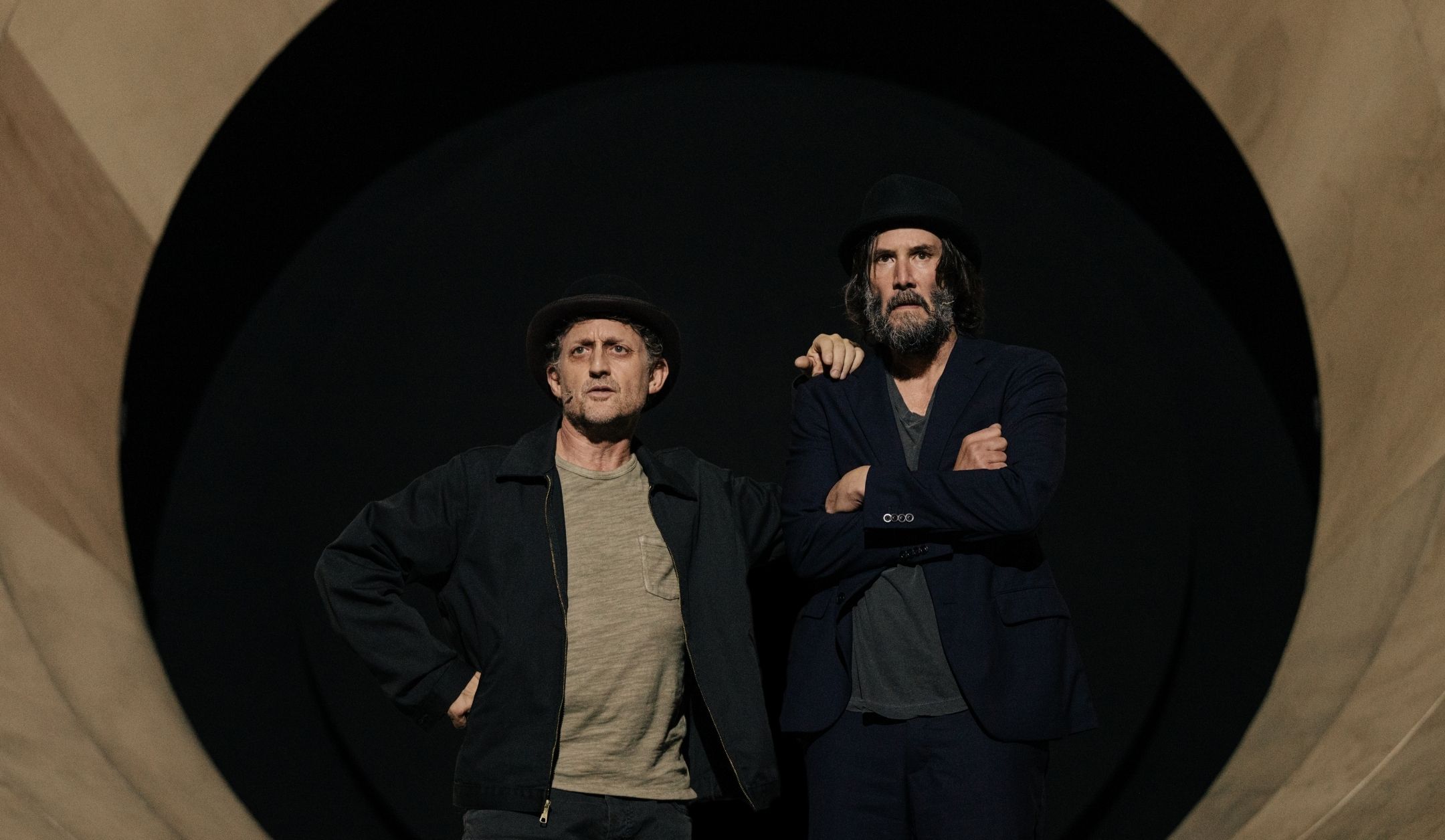
2025 Broadway production of Waiting for Godot (Andy Henderson)
What is absurdist theatre? While originally referring specifically to a genre of plays that sprang out of the post World War II period, wherein playwrights explored philosophical concepts like existentialism to write about the meaning, or lack of meaning, of life on this earth, the term has now expanded to include plays that experiment with theatrical form and structure to comment on the human condition.
A rewarding challenge for talented actors and theatres who wish to push boundaries, absurdist works tangle with major concepts like emptiness, language, meaning, life, death and humanity. While the words themselves, or the order in which they are presented, may demand concentration to fully grasp, the topics explored by absurdist works are relatable to all. What does it mean to be alive, day after day and hour after hour?
Discover how many of the theatre’s most gifted playwrights have answered this universal question in this collection of moving, challenging, memorable plays affiliated with the Theatre of the Absurd.
A Bench At The Edge by Luigi Jannuzzi (US/UK)
(Short Play, Dramatic Comedy / 2 any)
A person sits on a bench at the edge of an abyss. In the style of Theatre of the Absurd, this is simply done as a bench on the edge of the stage apron. Along comes a second person contemplating “a heroic dive.” What is the abyss and what are these people doing here? With classic absurdist charm and thoughtfulness, this short play is an easy-to-handle introduction to what makes this genre so rewarding.
Authorial Intent by Itamar Moses (US)
(Short Play, Drama / 1w, 1m)
Three days after moving in together, a woman tells a man she doesn’t love him anymore. Suddenly, the play itself undergoes a parallel breakdown, with the two characters speaking their objectives and subtext instead of their dialogue. Finally the two actors step out of character to look back and wonder: is there anything at all behind the artifice?
Ballyturk by Enda Walsh (US)
(Full-Length Play, Dark Comedy / 3m)
Gut-wrenchingly funny and achingly sad, and featuring jaw-dropping moments of physical comedy, Ballyturk is an ambitious, profound and tender work from one of Ireland’s leading playwrights. The lives of two men unravel over the course of the show. Where are they? Who are they? What room is this, and what might be beyond the walls?
Blackademics by Idris Goodwin (US/UK)
(Full-Length Play, Comedy / 3w)
There’s something strange about the trendy new restaurant in town. When Ann and Rachelle meet there for dinner, there’s already tension in the friendship they’ve built on their common experience navigating academia as Black women. But as the hunger sets in, the two professors find themselves the unknowing stars of an absurdist dinner theatre performance of Black plight. Somebody’s got to get the first bite, after all. A sharp, surreal satire about who gets a place at the table.
Do You Feel Anger? by Mara Nelson-Greenberg (US/UK)
(Full-Length Play, Dark Comedy / 3w, 4m)
Sofia was recently hired as an empathy coach at a debt collection agency – and clearly, she has her work cut out for her. These employees can barely identify what an emotion is, much less practice deep, radical compassion for others. Do You Feel Anger? is an outrageous comedy about the absurdity – and the danger – of a world where some people’s feelings matter more than others’.
Endgame by Samuel Beckett (US/UK)
(Full-Length Play, Drama / 1w, 3m)
The pinnacle of Samuel Beckett’s raw minimalism, Endgame is a pure and devastating distillation of the human essence in the face of approaching death. Here, a blind yet domineering elderly man castigates his servile companion in an abandoned house in a post-apocalyptic wasteland. When will the end come? Endgame, originally written in French and translated into English by Beckett himself, is considered by many critics to be his greatest single work and one of the central works affiliated with the Theatre of the Absurd.
Exit the King by Eugène Ionesco and Donald Watson (US/UK)
(Full-Length Play, Drama / 3w, 3m)
This absurdist exploration of ego and mortality is set in the crumbling throne room of the palace in an unnamed country where King Berenger the First has only the duration of the play to live. Once, it seemed he ruled over an immense empire and commanded great armies, but now his kingdom has shrunk to the confines of his garden wall. Refusing to accept his end, he is attended by his present and former queens, who must help him face the final inevitable truth of life: death.
Far Away by Caryl Churchill (US/UK)
(Full-Length Play, Drama / 3w, 1m)
This hour-long futuristic nightmare envisions a world where the promise of violence broods and nothing is to be trusted. Written by the celebrated author of Top Girls and Cloud Nine, this innovative work depicts a chilling world where everyone is at war, and not even the birds in the trees or the river below can be trusted.
Funnyhouse of a Negro by Adrienne Kennedy (US/UK)
(Short Play, Drama / 5w, 3m)
Adrienne Kennedy’s Obie-winning classic – a daring, complex, groundbreaking work – explores themes of racial identity as a young woman struggles to understand her place in a world steeped in racism and conflict. This search is manifested in Sarah’s many selves: Queen Victoria, the Duchess of Hapsburg, Patrice Lumumba and Jesus Christ. This thought-provoking mini-masterpiece continues to resonate through the generations.
Gary: A Sequel to Titus Andronicus by Taylor Mac (US)
(Full-Length Play, Drama / 3 any, 1 any youth)
In Gary, maverick theater artist Taylor Mac’s singular world view intersects with Shakespeare’s first tragedy: Titus Andronicus. Set just after the blood-soaked conclusion of that sensationally gruesome tale, the years of battles are over, the country has been stolen by madmen and there are casualties everywhere. And two very lowly servants are charged with cleaning up the bodies.
God’s Ear by Jenna Schwartz (US/UK)
(Full-Length Play, Drama / 4w, 3m)
When a husband and wife have trouble coping with the loss of their son, they find themselves speaking in clichés and the husband travels to forget. The wife stays with their daughter and the tooth fairy and tries to figure out how to cope from home. Through the skillfully disarming use of language and homilies, the play explores with subtle grace and depth the way the death of a child tears one family apart.
Iowa by Jenna Schwartz and Todd Almond (US/UK)
(Full-Length Musical, Dark Comedy / 6w, 1m, 1 girl)
Mom found her soulmate on Facebook, and he lives in Iowa. So Becca says goodbye to her beloved math teacher, bulimic best friend, neighborhood pony and mildly deficient teenage life, following her wayward mother to a new, uncharted beginning. But in this fanciful, absurdist and intoxicating musical play from the imagination of Jenny Schwartz and Todd Almond, nothing can prepare them for what they’ll find.
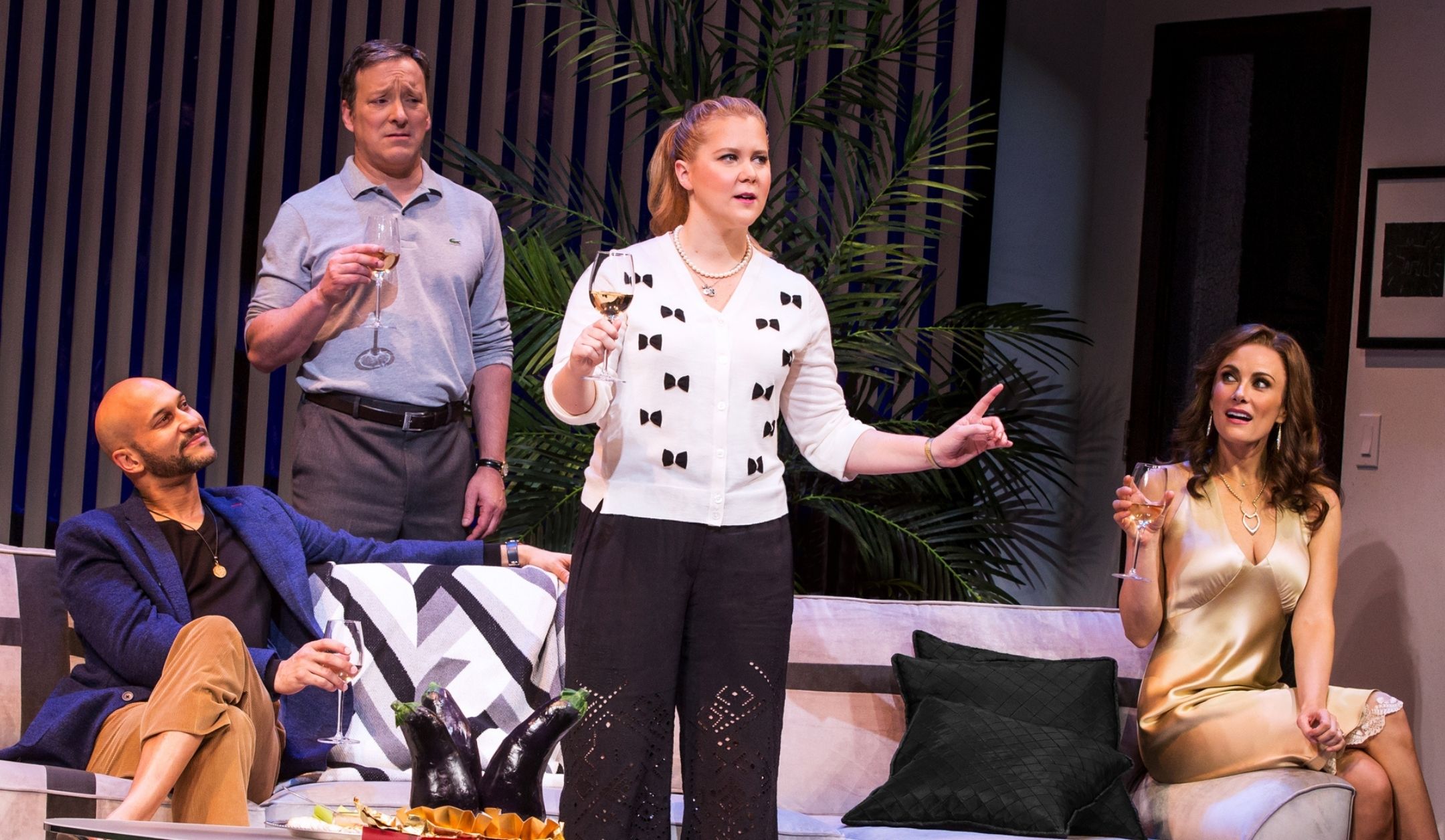
2017 Broadway production of Meteor Shower (Matthew Murphy for MurphyMade)
Meteor Shower by Steve Martin (US/UK)
(Full-Length Play, Comedy / 2w, 2m)
Corky and Norm are excited to host Gerald and Laura at their home in the valley outside Los Angeles to watch a once-in-a-lifetime meteor shower. But as the stars come out and the conversation gets rolling, it becomes clear that Gerald and Laura might not be all that they appear to be. The couples begin to flirt and insanity reigns. Era-defining comedian Steve Martin, using his trademark absurdist humor, bends the fluid nature of time and reality to create a surprising and unforgettably funny play.
No Exit by Jean-Paul Sartre and Paul Bowles (US)
(Full-Length Play, Drama / 2w, 2m)
Two women and one man are locked up together for eternity in one hideous room in Hell. The windows are bricked up, there are no mirrors, the electric lights can never be turned off, and there is no exit. Famously, hell is other people in this existentialist chamber of horrors.
Pass Over by Antoinette Chinonye Nwandu (US/UK)
(Full-Length Play, Drama / 3m)
A provocative riff on Waiting for Godot, Pass Over is a rare piece of politically charged theater by a bold new American voice. Moses and Kitch stand around on the corner – talking shit, passing the time, and hoping that maybe today will be different. As they dream of their promised land, a stranger wanders into their space with his own agenda and derails their plans.
Philip Glass Buys a Loaf of Bread by David Ives (US/UK)
(Short Play, Comedy / 2w, 2m)
This short formal experiment might be absurdist, but the title is self-explanatory – the ever-inventive David Ives has created a parodic musical vignette in trademark Glassian style that captures an existential moment of crisis for the composer.
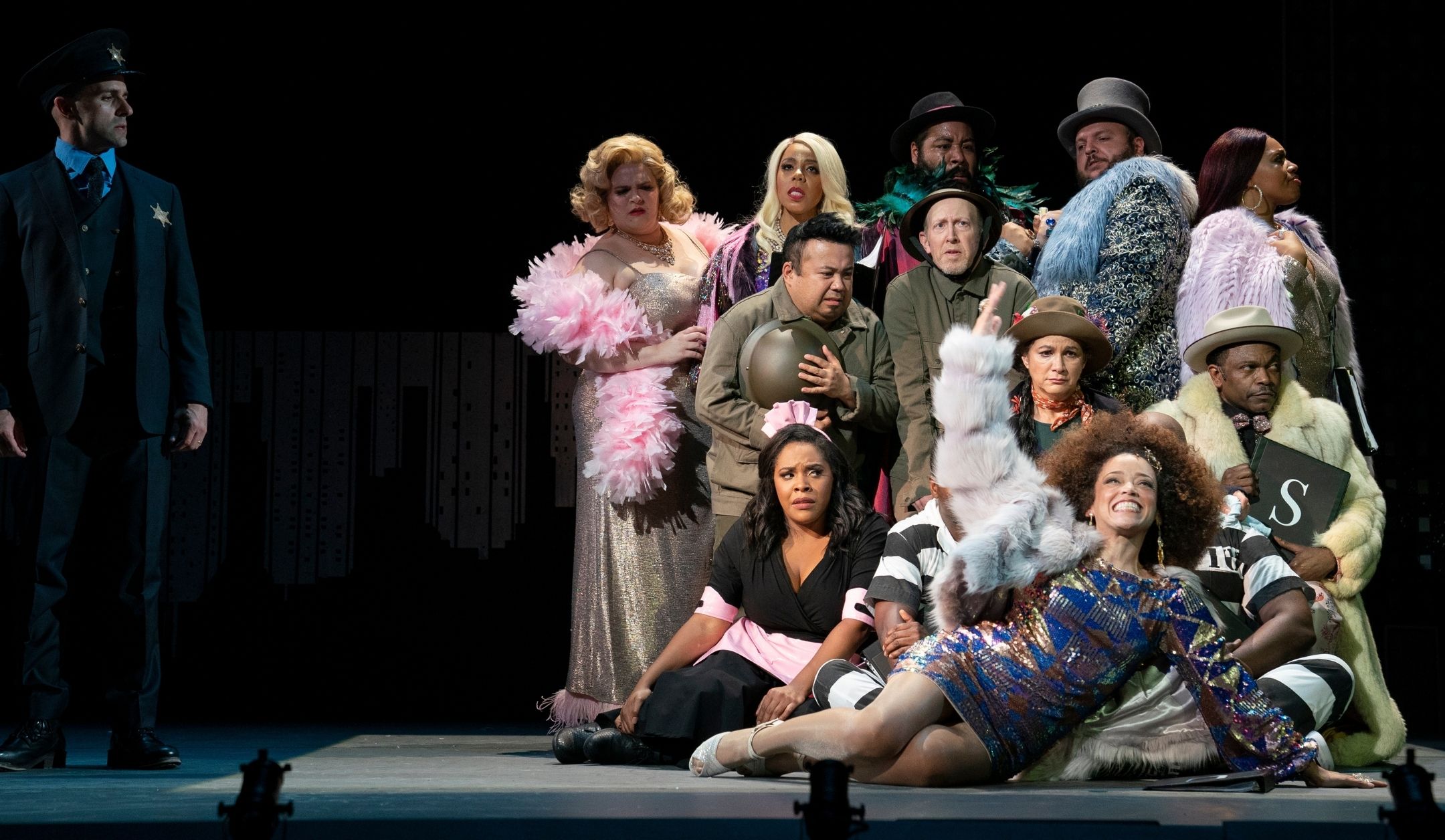
2019 New York City Center production of Promenade (Joan Marcus)
Promenade by María Irene Fornés and Al Carmines (US)
(Full-Length Musical, Comedy / 6w, 11m)
This absurdist delight – a groundbreaking off-Broadway hit – follows the Candide-like travails of two escaped prisoners, known only by their numbers, as they make their way into and through The City, where the poor and homeless mingle with the Idle Rich.
Rhinoceros by Eugène Ionesco and Derek Prouse (US/UK)
(Full-Length Play, Political Satire / 5w, 10m)
The sublime is confused with the ridiculous in this savage commentary on the human condition, a staple of 20th-century drama. A small town is besieged by one roaring citizen who becomes a rhinoceros and proceeds to trample on the social order. As more citizens are transformed into rhinoceroses, the trampling becomes overwhelming and more citizens become rhinoceroses. Only one sane man, Berenger, remains, unable to change his form and identity.
Rosencrantz and Guildenstern Are Dead by Tom Stoppard (US/UK)
(Full-Length Play, Dramatic Comedy / 2w, 14m)
Acclaimed as a modern dramatic masterpiece, Rosencrantz and Guildenstern Are Dead is the fabulously inventive tale of Hamlet as told from the worm’s-eye view of the bewildered Rosencrantz and Guildenstern, two minor characters in Shakespeare’s play. In the great Tom Stoppard’s best-known work, this Shakespearean Laurel and Hardy finally get a chance to take the lead role, but do so in a world where echoes of Waiting for Godot abound, where reality and illusion are entwined, and where fate leads our two heroes to a tragic but inevitable end.
Seascape by Edward Albee (US)
(Full-Length Play, Drama / 2w, 2m)
On a deserted stretch of beach, a middle-aged couple, relaxing after a picnic lunch, talk idly about home, family and their life together. She sketches, he naps, and then suddenly they are joined by two sea creatures – lizards who have decided to leave the ocean depths and come ashore. Initial fear is soon replaced by curiosity and, before long, the humans and the lizards (who speak admirable English) are engaged in a fascinating dialogue.
Staff Meal by Abe Koogler (US/UK)
(Full-Length Play, Dark Comedy / 2w, 1m, 4 any)
Mina and Ben, two strangers who frequent the same café, strike up a conversation and decide to have dinner together. But something strange is happening in the city outside: The streets are empty and a bird calls a warning. Amidst this unsettling atmosphere, Mina and Ben find themselves in the only place still open: a mysterious restaurant where service is an art, the chef may be a god and food is a portal to other – better – worlds.
The Birthday Party by Harold Pinter (US/UK)
(Full-Length Play, Drama / 2w, 4m)
Meg and Petey live in a small seaside boarding house with their boarder, a strange chap named Stanley. Two strangers, a sleek man named Goldberg and his musclebound henchman McCann, arrive unexpectedly. Meg naively accommodates them with a room, and decides to arrange a birthday party for Stanley. At the party, Goldberg and McCann play cruel games with the boarder, breaking his glasses, making a buffoon of him and ultimately pushing him over the psychotic precipice. An absurdist “comedy of menace” from a stalwart of the genre in Harold Pinter.
The Dumb Waiter by Harold Pinter (US/UK)
(Short Play, Dark Comedy / 2m)
Gus and Ben are on the job, waiting and listening. Into the waiting silence rattles the dumb waiter with extraordinary demands for dishes they cannot supply – and who is operating the dumb waiter in an empty house? In a while their victim will come and they will know what to do.
The Maids by Jean Genet and Bernard Frechtman (US/UK)
(Full-Length Play, Drama / 3w)
Two sisters, maids to a wealthy society woman, act out fantasies of class, love and revenge while the lady of the house is out on a romantic rendezvous. As their games intensify, the violence escalates as they await Madame’s return. The ultimate goal of their role-playing is to enact the real murder of Madame as the only way to free themselves from their servitude in this classic of absurdism that reduces desire to its purest and basest form.
The Real Inspector Hound by Tom Stoppard (US/UK)
(Full-Length Play, Comedy / 3w, 5m)
Feuding theatre critics Moon and Birdboot are swept into the whodunit they are viewing in this hilarious spoof of Agatha Christie-esque mysteries, filled with classically Stoppardian musings on fate and free will. In the wild proceedings that follow, the body under the sofa proves to be the missing first-string critic. As mists rise about isolated Muldoon Manor, Moon and Birdboot become dangerously implicated in the lethal activities of an escaped madman.
The Universal Language by David Ives (US/UK)
(Short Play, Comedy / 1w, 2m)
Dawn, a young woman with a stutter, meets Don, the creator and teacher of Unamunda, a wild comic language. Their lesson sends them off into a dazzling display of hysterical verbal pyrotechnics – and, of course, true love. Here, Ives explores one of the fundamental questions animating absurdist theatre – why and how we assign certain meanings to certain words.
Ubu Rex by Alfred Jarry and David Copelin (US)
(Full-Length Play, Political Satire / 2w, 18m plus ensemble)
Provocative, profane and proud of it, Alfred Jarry’s Ubu Roi caused riots upon its Paris premiere. David Copelin’s new translation, Ubu Rex, brings the world’s first absurdist play hurtling into the present. Ubu Rex unmasks what’s just below the surface of “normal” human behavior. Set in Poland, “that is to say, nowhere,” the play satirizes governments, philosophies, Shakespeare and the greed and vanity of ordinary human beings in telling the story of Pa and Ma Ubu. It is also incredibly funny.
Waiting for Godot by Samuel Beckett (US/UK)
(Full-Length Play, Dramatic Comedy / 4m, 1 boy)
The quintessential absurdist play finds two wandering tramps, Vladimir and Estragon, waiting by a lonely tree to meet up with Godot, an enigmatic figure in a world where time, place and memory are blurred and meaning is where you find it. The tramps hope that Godot will change their lives for the better. Instead, two eccentric travelers arrive, one man on the end of the other’s rope. The results are funny and dangerous in Beckett’s existential classic.
When Is A Clock by Matthew Freeman (US/UK)
(Full-Length Play, Dramatic Comedy / 3w, 5m)
When Gordon’s wife vanishes, the only clue to her whereabouts is a bookmark in a dog-eared copy of Traveling to Montpelier. Through a fractured narrative that is half-mystery and half-memory, the play explores Gordon’s marriage, his relationship with his son and his wife’s bizarre entanglements with a mysterious stranger. Conjuring a unique theatrical landscape, When Is A Clock presents a magical universe with physics and laws that can free the characters from their own stifling identities.
Where Women Go by Tina Howe (US/UK)
(Full-Length Play, Comedy / 8w, 2m)
Where Women Go is a series of three short one-acts for a diverse cast of women of various ages. Tina Howe’s eccentric plays explore the humor and absurdity of women’s daily lives as they visit the dermatologist, eat at Subway and go shopping.
For more great absurdist plays and musicals, visit Concord Theatricals in the US or UK.
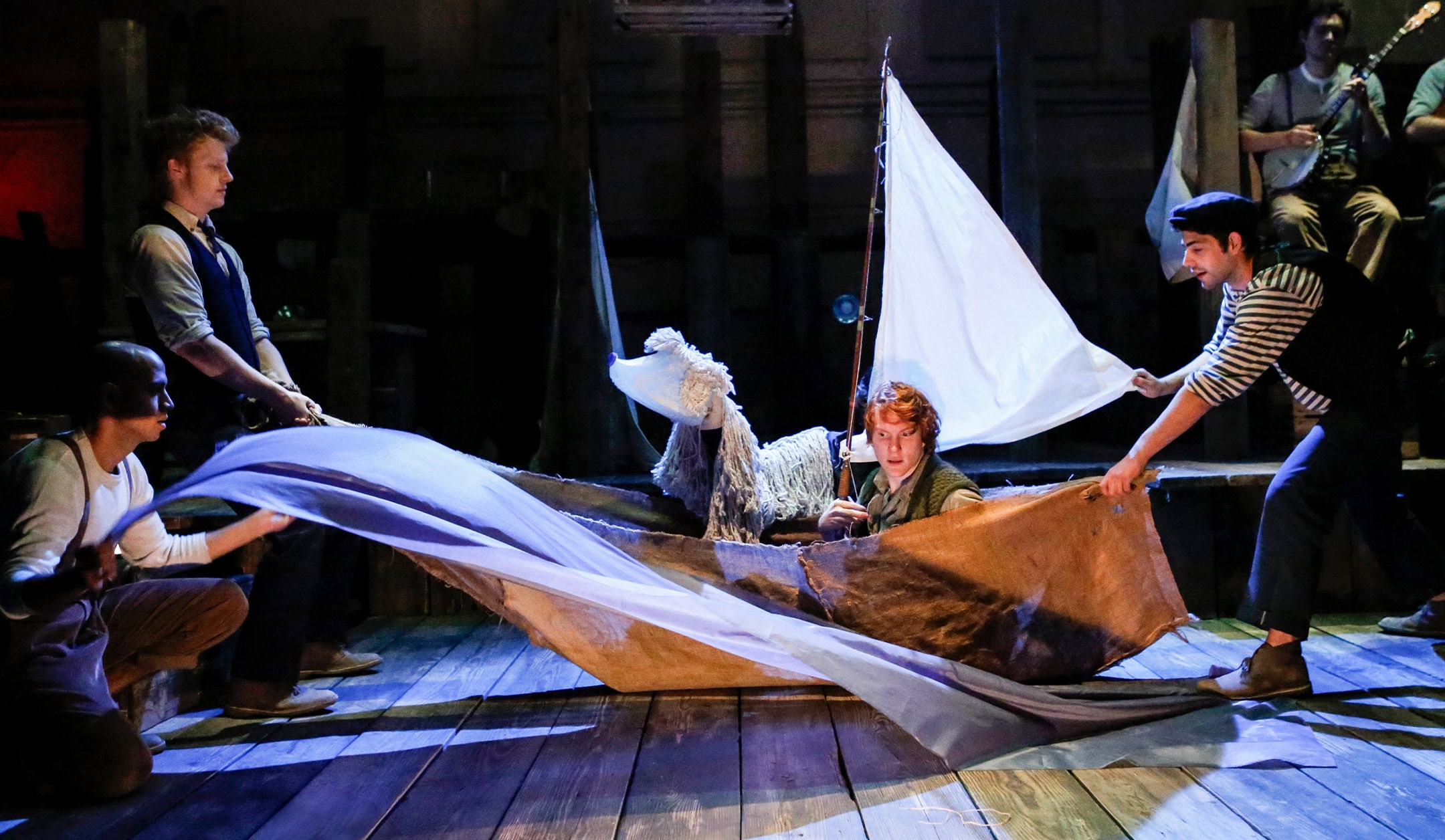
Shows Featuring Puppetry
Puppetry has been part of theatre and storytelling for centuries. In this article, discover a range of shows for a variety of audiences – and performers! – all with great opportunities for puppetry.

A Conversation with John Bucchino
John Bucchino, composer/lyricist of A Catered Affair, It’s Only Life and A Peacock Among Pigeons, reflects on the influences and creative instincts that have shaped his warm, vulnerable and meticulous work.
Women in STEM: Characters Across Science, Technology, Engineering and Math
While historically underrepresented, dozens of women across both history – and fiction! – excel in the fields of science, technology, engineering and mathematics (STEM). Here, discover brilliant theatrical works that feature these ladies.