
How do you know when someone is going off-script? What happens when bodies start piling up on- and off-stage? Why does everyone who’s ever acted in community theatre instinctively respond “thank you, five” no matter their emotional state? In Ryan Spahn’s dark and delightful Inspired by True Events (US/UK), the show must go on, despite the fact the star has arrived in a dangerously unhinged state, possibly having committed a murder. There’s a full house waiting, so why shouldn’t the company try and push through? Jumping gracefully from horror to hilarity and everything in between, Spahn’s loving satire sheds a cold light on the theatre, and the talented actors (and possible murderers) who inhabit it.
We reached out to Ryan to talk about his writing and to discuss Inspired by True Events in fuller detail.
What was the initial idea that sparked the writing of Inspired by True Events?
I’ve always loved true crime and horror. When I read the headline “Community Theatre Actor Brings Body Parts to Greenroom,” it hit me like the perfect horror logline. That collision of everyday theatre life and something grotesque immediately sparked my imagination. I adore the theatre and the people in it, and blending that world with a creeping sense of dread felt like the right move.
How would you describe your work as a playwright?
I’m very drawn to dark comedy – Joe Orton is a huge influence. I’m obsessed with language and dialogue, so my work tends to center on specificity: making conversations sound lived-in, surprising and true. I aim to give each character a distinct voice, shaped by who they are and not by what I need them to say.
Inspired by True Events has a clear familiarity with its community theatre setting. As an actor and a playwright, what fascinates you about the interpersonal dynamics in community theatres?
I grew up doing local theatre in Detroit, and even as a kid I was struck by how seriously the adults took it – essentially a volunteer job taken with life-or-death intensity. Nobody was getting paid much, if at all, and yet they treated every production like a calling. Their passion shaped my own reverence for the theatre, for better or worse, and I’ve always been fascinated by that devotion.
The play blurs reality and fiction, from the mirrored play-within-a-play to the title itself. What interests you about the way on- and off-stage lives overlap?
Everything we do is inspired by something we’ve witnessed – our parents, teachers, friends, heroes, traumas. We’re all built from echoes of other people. So when writing or making art, the line between what’s “real” and what’s imagined is naturally blurry. I loved taking a true event and filtering it through my own imagination, through the personalities and behaviors of people I know and seeing how those types of people might navigate an outrageous situation.
There’s clever foreshadowing throughout the play, from the repeated mentions of the prop gun to Eileen’s early suspicion that “the men are the villains.” How did you portion out the mystery?
For me, horror is most effective when the audience knows something the characters don’t – when we know someone’s in the house, or something’s in the bag, or the killer is behind the door. That imbalance creates suspense. Theatre doesn’t give us many horror/thriller pieces, so I wanted to write something that scared me in the ways I love to be scared, pacing out clues so the audience is always a step ahead but still unsure of how the danger will unfold.
In the original production, a video feed displayed the play-within-a-play in real time. What spurred you to use multimedia in that way?
Video is inherently voyeuristic. The idea that the audience is watching one room live while another unfolds elsewhere automatically heightens the fear. We wanted to use multimedia: to unsettle the audience, to double the possible threats and to let them feel like something terrible might happen just off-screen. The live video element was also a theatrical puzzle we were excited to solve.
A lot of humor in the play comes from theatre tropes – the “thank you, [time]” refrain, Mary’s storage rules. Did you feel you were also creating a love letter to theatre?
Absolutely. There’s an inside-baseball quality to the show, but those rituals are repeated in a way that invites non-theatre audiences in. Part of the fun is letting people discover the odd little traditions performers live by, and showing them why we love this world despite – or because of – its ridiculousness.
Given the high-strung natures of the characters, would you agree that there’s a bit of mania lurking behind the eyes of any actor?
Oh yes. Desperation and a need to be seen run deep. Actors perform because they want to be witnessed – sometimes selfishly, sometimes as an offering. That desire can produce an energy that reads “high-strung,” but I think it’s really “highly passionate.” You have to care deeply to do this work.
If there was one thing you’d want audiences to take away from your play, what would it be?
Take the ride – and let it scare you a little.
To license a production or purchase the script for Inspired by True Events, visit Concord Theatricals in the US or UK.

Ian McWethy in Five Plays
Discover five hilarious, charming, inclusive plays by Ian McWethy, a playwright loved by audiences of all ages.
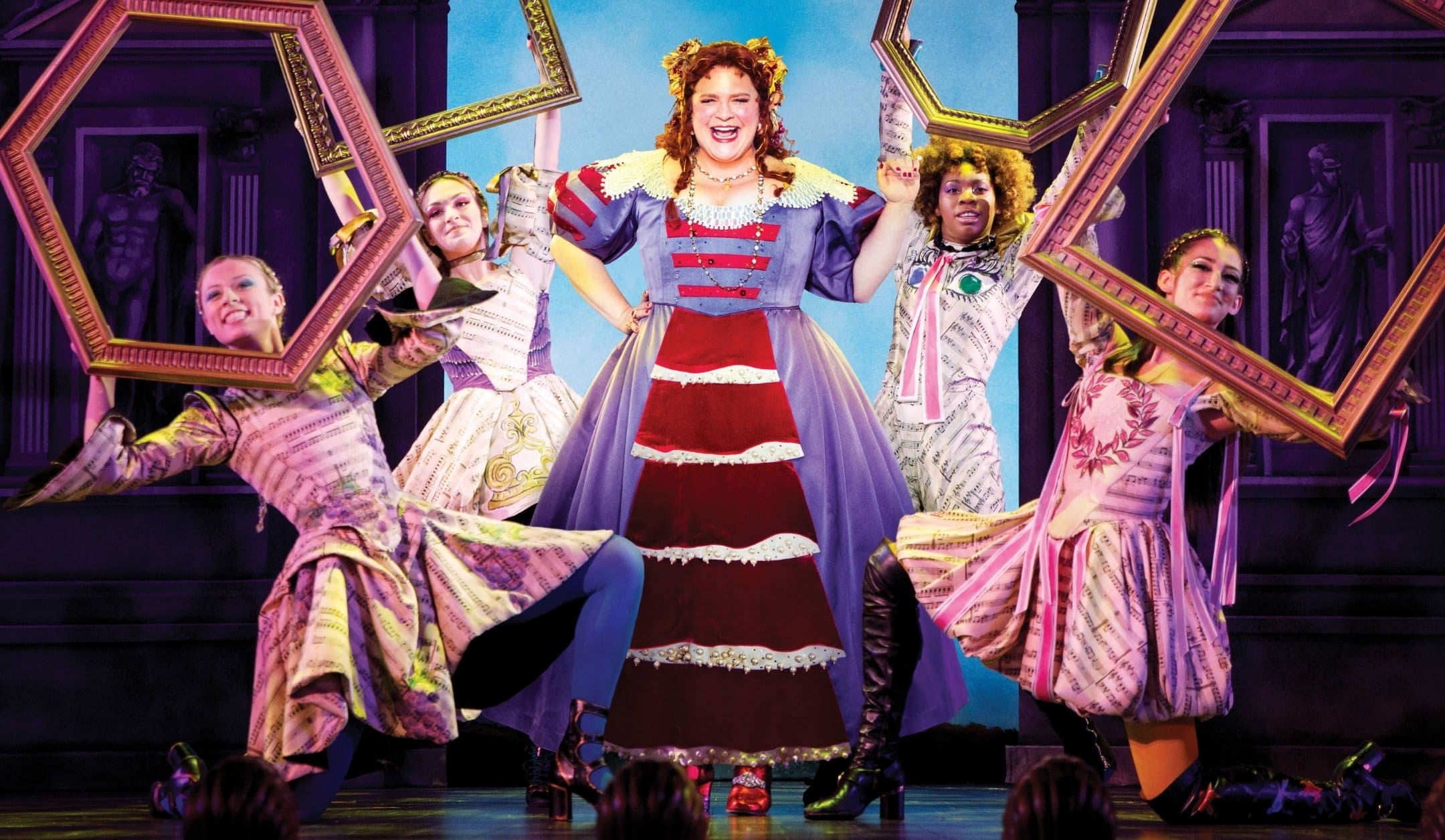
Community Theatre: Your 2026 Guide to Season Planning
Need help planning your next community theatre season? This selection of celebrated and noteworthy Concord Theatricals titles – arranged by genre – is sure to include the perfect show for your theatre and your audience.
Packing Up Polly: Playwright Leslie Kimbell on Her Comedy About Letting Go
Playwright Leslie Kimbell, creator of the hugely successful “Four Old Broads” series, discusses her dramatic comedy Packing Up Polly, celebrating female friendship, grief, hoarding, and laughing until you cry.