
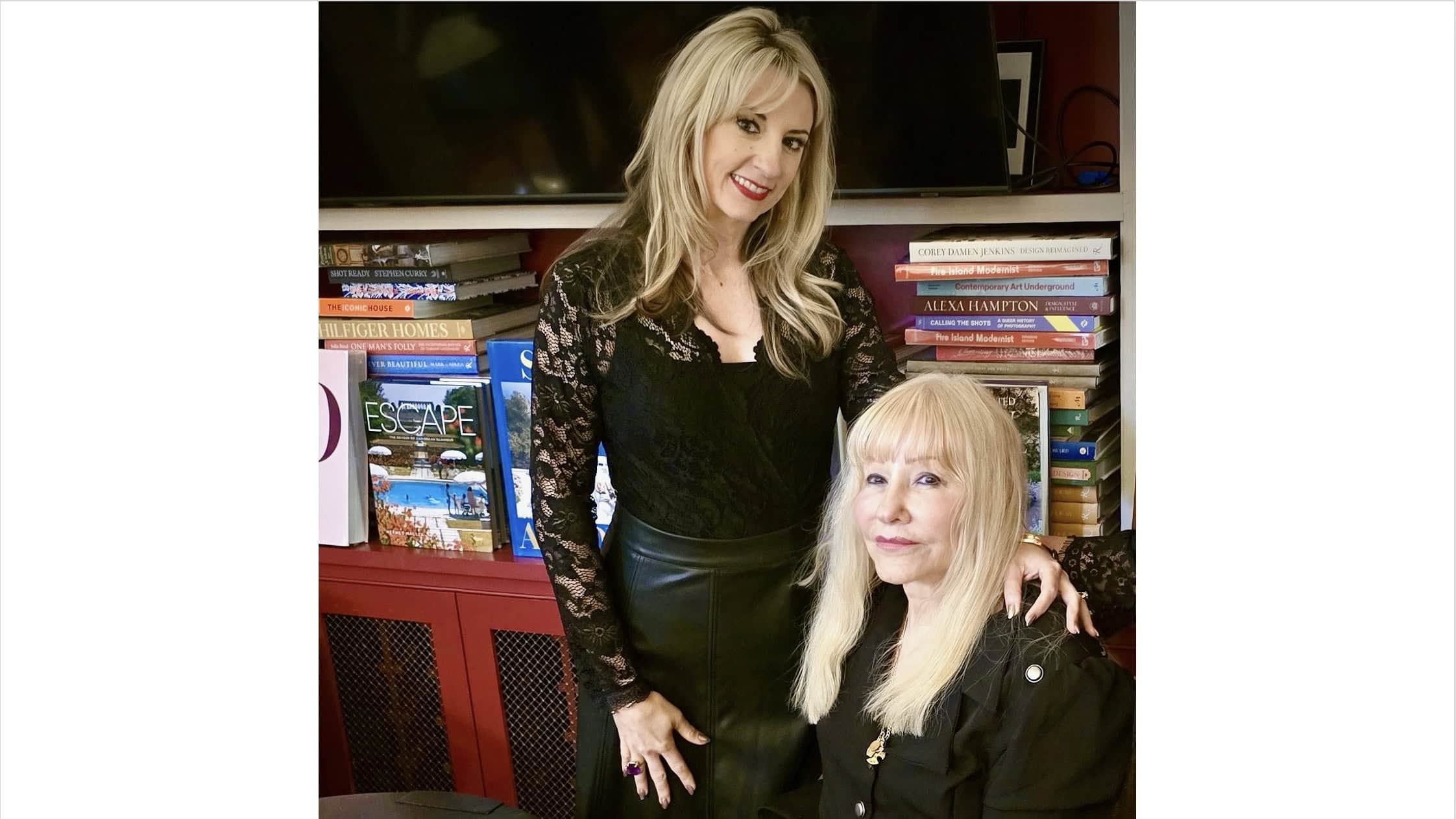
Concord Theatricals playwright Rosary Hartel O’Neill, a Ph.D.-holding academic who specializes in writing historical fiction for the page, stage and screen, has written several plays, including The Awakening of Kate Chopin, A Louisiana Gentleman, John Singer Sargent and Madame X and Marilyn/God. Rosary and her daughter Rory Schmitt recently co-wrote a new book, The Haunted Guide to New Orleans. Author/journalist Carole di Tosti sat down with mother and daughter to discuss their newest joint venture.
I have reviewed Rosary O’Neill’s books and plays extensively on Blogcritics.org and Caroleditosti.com over the years. I have also read most of her plays published by Samuel French, now Concord Theatricals. With a major in English and a Ph.D. in research, as a published playwright, novelist, poet and Drama Desk voter and critic of Broadway and Off Broadway, it has been my pleasure to follow Rosary O’Neill’s expanding career since first interviewing her in 2011 for Technorati.com (archived on the Wayback Machine).
I welcomed the opportunity to interview Rosary O’Neill and her daughter Rory Schmitt about their latest publication.
You have just released another book you co-wrote together, The Haunted Guide to New Orleans. How many books have you co-authored together thus far? In what way do you enjoy working with each other?
Rory Schmitt: The Haunted Guide to New Orleans is our fourth book we have written together. Our first book was about New Orleans Voodoo, and then we wrote two biographies on Edgar Degas and Kate Chopin. I enjoy working with my mom because she manages to balance her sense of excitement, joie de vivre, enthusiasm and passion with a depth of thought, profundity, complexity and mystery. She has an incredible commitment to writing. She writes prodigiously, daily, without excuses. She jumps into pain to create stories, and she performs as she writes. She whips the words until they feel like a play you’re watching on stage. She does this all with such grace and humility.
Rosary O’Neill: I love working with Rory because I have loved her for so many years. Years ago, as a little girl she read my plays and asked me questions about them. She always tested my curiosity and strength. She is just so smart and brilliant even as a child. Now she is such a thorough scholar in her approach to material, not to mention, a boundlessly creative poet herself. It’s truly a delight for me to leap into her generation and view stories from that youthful perspective. It’s a great honor to work with Rory. She’s always reciting monologues from my plays published by Concord to remind me that I need to live up to my own history.
And may I take the time now to thank you, Carole, for the years that you believed in me and now in Rory and all the magnificent articles you have written on us to chronicle our work as writers.
“We love New Orleans. We’re drawn to write about her ghosts because we’ve studied the city’s history and spirits still seem to still linger.”
Both of you have lived in New Orleans for years and have become experts on the culture and atmosphere of the city. What specifically drew you to the ghosts of New Orleans rather than presenting another aspect of the city’s culture?
RS: We love New Orleans. We’re drawn to write about her ghosts because we’ve studied the city’s history and spirits still seem to still linger.
I was also raised in a haunted house in New Orleans. Different supernatural occurrences were observed by everyone in my family. I have always been curious about ghosts, even as a kid. Now, we had this opportunity to share our own ghostly experiences, explore our spirituality, and discover what lies beyond. We also could connect with kindred souls who’ve had paranormal experiences. The haunted aspect of New Orleans is one of her beauties and what draws people from around the world to visit.
RO: My first published plays with Concord were all set in a haunted mysterious location – for example, Wishing Aces is set in a Bayou during a hurricane. I’ve always had an interest in the spiritual and mentioned it in my plays.
I have to say that the interest from our publisher in wanting this book and Rory’s enormous enthusiasm for doing it compelled me to want to write it. I have always feared and respected ghosts. I’m religious, but I don’t want to put my hand into a place that I can’t get it out of. Spirits of our ancestors come back and challenge many of the characters in my plays.
As a mother-daughter team, what is your process with regard to research, writing, revising?
RS: Well, it depends on the project that we’re working on. Our main commitment is to always equally share in the roles of the writing, revising and research. We draw from each of our own strengths and we check in daily with one another about progress.
RO: You know it’s so much fun, Carole, to have this connection with someone and to have this deep love and respect that we have between each other. I mean, as little girl, Rory used to type up my plays for me and sometimes tell me they were too long or unclear.
I’m still amazed at the fact that we’re working together and we kind of like get what needs to be done, but I’m strongly embedded in the dramatic theatrical tradition of storytelling and Rory has this amazing background as an artist, an art historian and visual artist.
Basically, we work together in a kind of tug-of-war between two pups that are totally bonded to each other. We personally write books that we ourselves are extremely interested in. As a child, in workshops of my plays at a local university, she would talk about making the scene more active physical and exciting for the students. Now with the ghost book, we talk about how we can make the story of the hero compelling. And of course, we’re deeply interested in stories about heroines and heroes of New Orleans, whose stories may have been lost in history.
What aspects of The Haunted Guide to New Orleans most challenged you?
RS: Getting personal. Being vulnerable. That’s all I’m going to share for now. The rest is in the book.
RO: I think for me, the mother, it was to be historically accurate, to talk about these profound experiences, as nonfiction history, and to act out these scenes and make them come alive like a play.
Are there additional areas that call for research and review. In other words, what areas might you further explore?
RS: We jumped into the pool of ghosts, and then we quickly got out before skin turned to prunes. You see, you can’t spend too much time in the spirit world, or it can be all consuming and terrifying. Sometimes you feel defenseless and overwhelmed and shocked by the experiences people share. But I’d like to go back into that world and listen to more stories. Since the book was published, it seems like people have been drawn to us to share even more ghostly encounters. There are more haunted spots in New Orleans, like the Loyola Law Library and Garden District Book Shop, where books just fly off the shelves. We know there are more haunted places to uncover in our city.
RO: Yes, I just think back to many times at the interviews where horrifying experiences were told, or thrilling or our inspiring experiences were told and I would go back and stop the speaker and say, “Tell me more about that. Explain exactly what you were feeling, what you were seeing, as much as you can.” That’s what I’ve done in my plays like Wishing Aces and The Wings of Madness and Maryiln/God. In each, I push the action to the edge of earthly understanding.
I think these ghosts are here to tell us something much as the Angel of God appeared to Our Lady and told her she was going to become the mother of God and an Angel of Warning appeared, if you will, to Saint Joseph to warn him to get out of Bethlehem or the child would be killed. I think there’s a reality to the spiritual world just like there’s a reality to our dreams, that if we totally go into it, we will see more. My comedy Turtle Soup goes into stories told before death.
Were there any individuals that you hoped to interview that declined for whatever reason?
RS: A Catholic priest we know declined to be interviewed. He said he would only participate in the interview if the goal was to bring people closer to God. Well, of course, we want to bring people closer to God, but the goal of the book didn’t quite align with his priorities. But we actually did interview an Episcopalian priest, and she was very open about mystical dreams, a haunting at the church, and bishops performing exorcisms.
RO: The priest had had so many mystical experiences that it caused him and his two brothers to enter the priesthood, so of course we want to know what these ghostly experiences were, but they were too close to his heart for him to tell us, unfortunately.
You include a number of photographs in The Haunted Guide to New Orleans. Was this at the request of your publisher? Why did you include examples of the selected photographs? Were there others that you would like to have included but were not able to?
RS: We love including artwork in our books because we know how instantaneously readers connect with images. The photography and illustrations draw people into the ghostly world of New Orleans. Our editor encouraged us to include photographs. Based on our previous books, we like to include several. We were thrilled that the publisher decided to print a color insert of several photographs. The artwork looks absolutely stunning. My sister, Rachelle O’Brien, is a fabulous photographer, and I loved including her pictures of Jackson Square and the Pontalba Apartments after the rain. She also created a gorgeous photograph through her car window of a streetcar during a thunderstorm. Cheryl Gerber is another local photographer whose artwork is simply masterful. She shared with us stunning photographs of Anne Rice’s tomb and the chapel at Saint Roch Cemetery. Additional photographers included Sam Blankenship, Robert Schaeffer, Jr., and me.
RO: I think our work is becoming more and more visual. At least that’s what I’m hoping it is, because Rory has this intense background in art history and this wonderful ability to visualize the situation. In the theatre workshop that I’m currently taking with Eduardo Machado in NYC (I take it every week for three hours in a virtual class in New York), the emphasis is on how you tell the story visually, bigger than life. You can do that if you provide the right details. It can be great drama dealing with life and death issues not melodrama.
We have been so blessed with magnificent photographers in New Orleans, not to mention Rory, who’s a fabulous photographer herself. So, we want to bring that dynamic to some people who may not read our books, but look at pictures like they were seeing a play.
“We are from New Orleans, and New Orleans breathes and breeds ghosts.”
Did you include all of the ghostly presences known to be in NOLA? Might there be others you missed because you are unfamiliar with them?
RS: It’s impossible for us to include all the ghostly presences in New Orleans. New ones pop up every day! We look forward to continuing our explanation of haunted New Orleans for a future book.
RO: I think the two of us having lived a combined life here over 100 years, we included most of the ones that are the most potent. Capturing all the spirits and demons is impossible.
How did you discover the ghosts of New Orleans? What ghosts did you discover most recently? What ghosts were those you learned about from family stores or myths of the city?
RS: Ghost residents inhabit the city. Many Uptown residents accept ghosts as a fact. Spirits swarm in ancient oak trees, linger on verdant verandas, and occupy cobwebbed wardrobes. We learned of many haunted stories of New Orleans through my great grandmother, Vera Malter Nix.
RO: My grandmother Nix was terrified of ghosts, and she inculcated this fear in me as a young child, when I spent the night with her because she would tell “ghost stories,” basically stories about dead people who returned. She acted out these horrible situations, much like actors act out the horrible death scene in my play Turtle Soup.
She always started a story with “Father Daly told me this tale, and God rest his soul, he would never lie.” She gave the story the potency of a religious priest. I do that, too, in my play White Suits in Summer, when priests arrive to the death bed.
How is your guide different from the ghostly tours of New Orleans? Or is it an enhancement with more detail than the tours?
RS: Our guidebook is more far-reaching than going on a ghost tour in New Orleans. We include all the neighborhoods of the city, while generally the walking tours focus on the French Quarter. But we glide through City Park, the Garden District, and in the Marigny too. We also include individual unique ghost encounters that we gleaned from our interviews.
RO: I’m not sure that all these people who lead the tours are actually from New Orleans, but I can say I was born, raised, went to college and graduate school, and taught college in New Orleans. Rory was born, raised, and went to high school here in New Orleans, and so I think we approach the fear of ghosts and the respective ghosts with a devotion that you may not see in all tour guides.
We know the city pretty well, having lived in many parts of it. The main house we lived in on Carrollton Avenue was haunted and we tell stories of it from different perspectives. We have lived in different parts of the city like Uptown and French Quarter and St. Charles Ave and Central city and Lakeside and Metairie. Our ghost guidebook is an enrichment because it focuses on different neighborhoods and the specific ghosts there. Much like in a play, for example, my play Marilyn/God, our guidebook lists specific characters.
How does The Haunted Guide to New Orleans reaffirm Rosary O’Neill’s numerous plays about ghosts and New Orleans?
RS: Many of my mom’s plays have a spiritual element to them. It could a famous actress, like Marilyn Monroe talking to God. Or it might be a woman trying on funeral shrouds. The idea that a divine presence is part of daily life comes naturally to my mom. Haunted tales and stories of ghosts automatically bring drama, surprise, excitement. Great playwrights spin eternity and are ignited by the mystical. You see, invisible connections tie us to characters and their frozen worlds.
RO: You know, it’s so deeply part of New Orleans that ghosts appear in many of my published plays with Concord. I can go down the list. In Marilyn/God, Marilyn Monroe discovers she’s dead and wonders if she’s going to get to heaven. In The Wings of Madness, a young woman finds herself coming out of a casket in a New Orleans funeral parlor. In White Suits in Summer, a young woman is sitting by the bedside of her dying uncle and confronts unreal visitations. In Turtle Soup, an old aunt on her deathbed terrorizes and humorizes her descendants. In Solitaire, relatives gather in the Mississippi mansion of their family because a death has occurred and the family inheritance is at stake.
I don’t think I could write anything without going into the major questions of existence and bumping into ghosts. Where are we going when we fall off the edge of this earth? That’s what we’re all trying to figure out and how to deal with that the best we can. Rory and I are not working together on a play about vampires in New Orleans. So Vampires Last Bite may be next.
As always, plays are at the core of our ghost stories. We were both raised on dramatic stories, mostly of the dead. That’s because we are from New Orleans, and New Orleans breathes and breeds ghosts.
For more information about the plays of Rosary Hartel O’Neill, visit Concord Theatricals in the US or UK.
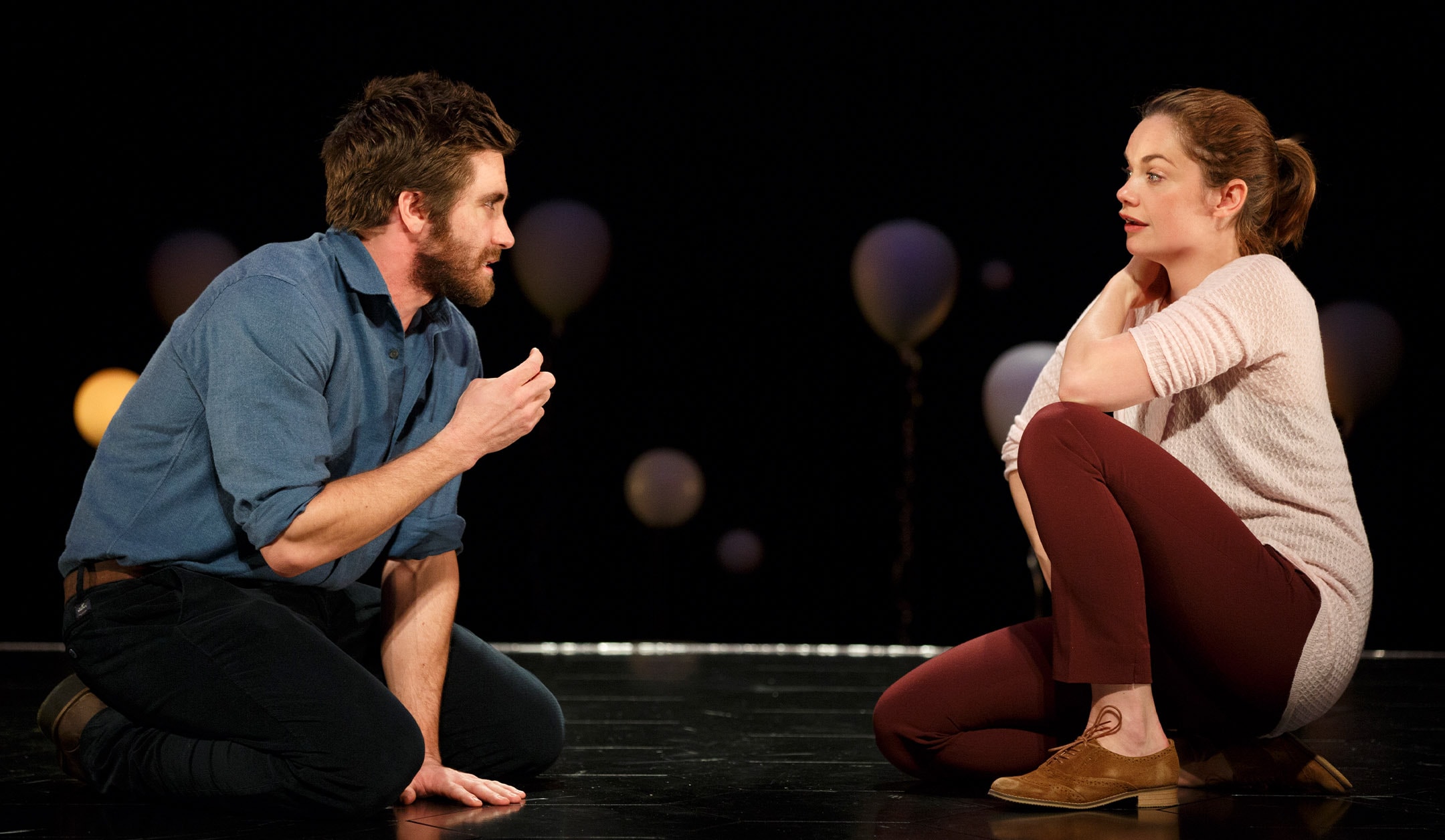
Women in STEM: Characters Across Science, Technology, Engineering and Math
While historically underrepresented, dozens of women across both history – and fiction! – excel in the fields of science, technology, engineering and mathematics (STEM). Here, discover brilliant theatrical works that feature these ladies.
Ian McWethy in Five Plays
Discover five hilarious, charming, inclusive plays by Ian McWethy, a playwright loved by audiences of all ages.
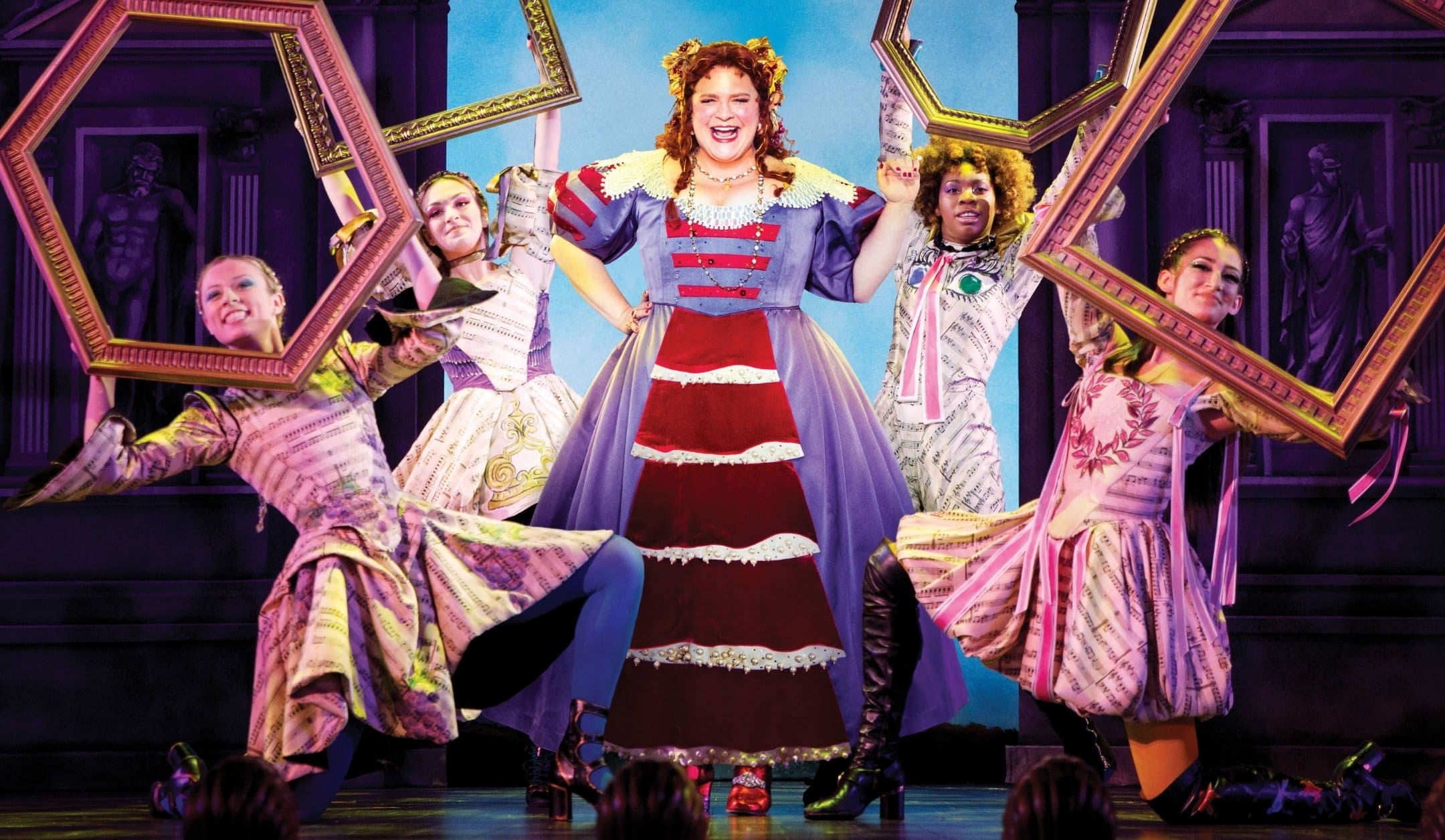
Community Theatre: Your 2026 Guide to Season Planning
Need help planning your next community theatre season? This selection of celebrated and noteworthy Concord Theatricals titles – arranged by genre – is sure to include the perfect show for your theatre and your audience.