
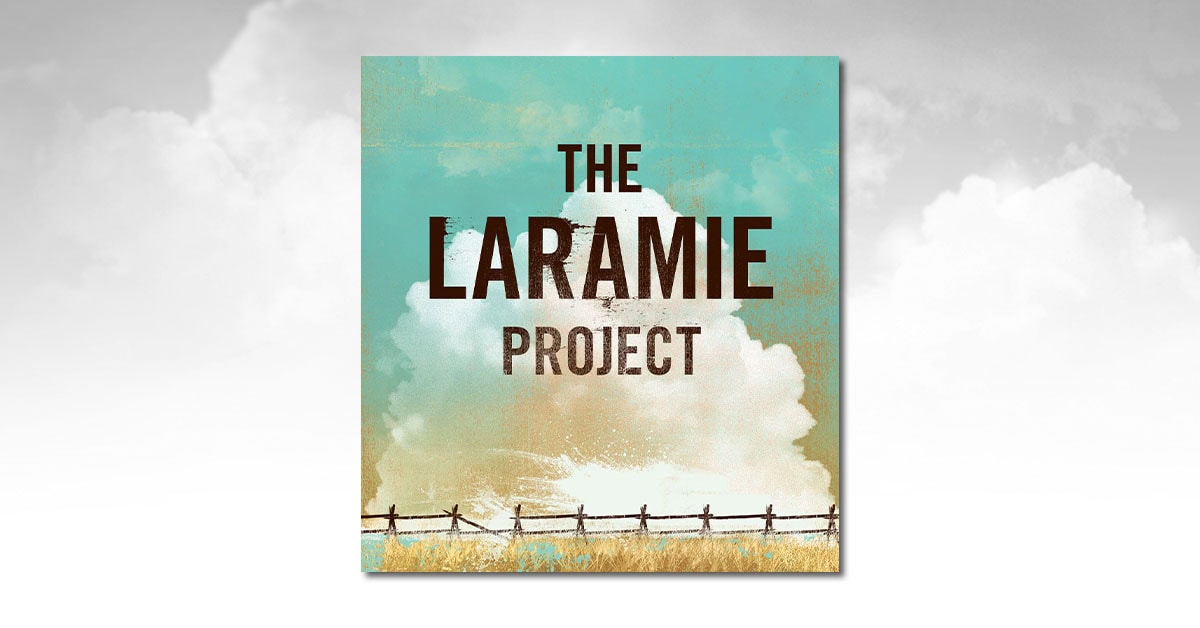
More than 25 years after its original production, Moisés Kaufman and the Tectonic Theater Project’s The Laramie Project (US/UK) remains one of the most devastating and heart-rending pieces of docudrama created for the stage. Centering on the aftermath of the horrifying murder of a young gay man in Laramie, Wyoming – Matthew Shepard, who was beaten, tied to a fence post and left to die in a homophobic hate crime – the play explores humanity’s capacity for cruelty without ever losing sight of the people left in its wake. Noted for its journalistic veracity (The Laramie Project’s script was formed from extracts of hundreds of verbatim interviews that the members of the Tectonic Theater Project conducted with Laramie residents), The Laramie Project is a work whose power stems from its adherence to reality. These horrific events happened, and how people reacted to the events – in confusion, in fear, in rage – is a fact of history as well. In this latest edition of Breaking Character’s The Truth Behind… series, we explore how this innovative and gripping piece of theatre came to be.
The Process
“I will trust you people that if you write a play of this, that you say it right, say it correct.” – Father Roger Schmit (The Laramie Project, p. 65)
On October 6, 1998, Matthew Shepard was approached by Aaron McKinney and Russell Henderson at the Fireside Lounge in Laramie, where the two men proceeded to offer him a ride home. On the way there, McKinney and Henderson pulled over to a rural area and robbed Shepard, then pistol-whipped and tortured him before leaving him to die in what was evidently a homophobic hate crime. Shepard’s body was not discovered for 18 hours, and although he bravely fought on in an intensive care unit, Matthew Shepard tragically passed six days later, on October 12, 1998.
In Moisés Kaufman’s own words, the genesis of The Laramie Project came from a desire to see what, if anything, theatre artists could do to respond to the chilling events they had heard about in Laramie. Using The Tectonic Theater Company’s philosophy of “moment work,” defined as exploring “the theatrical potential of all the elements of the stage in order to create strong theatrical and dramatic narratives from the ground up,” they elected to visit Laramie and conduct interviews with the local residents, to see whether this could form the basis of transformative art. As a result, 10 members of the Tectonic Theater Project traveled to Laramie in November 1998, where they conducted the first wave of interviews. It was important to the group that they heard voices from all across the Laramie community, and it is this panoply of opinions and tones that makes The Laramie Project so powerful. Unfiltered and raw, it is the portrait of a community in great grief, both for the young man lost and what his loss reveals about their town.
The members of the company would then return five months later, in April 1999, having already workshopped a version of the play back in New York, in order to conduct another round of interviews in the wake of of Russell Henderson’s trial for murder. By this point, events in Laramie had become national news and the subject of intense public interest, while the town itself struggled with increased media presence. Despite the media furor, The Tectonic Theater Project continued to source more verbatim material for their then in-development work, making sure to once again scour all parts of the community for interviews. A smaller cohort of writers then shaped the hundreds of hours of material into a workable script. The results were all the more moving because they seemed to be beamed in right from the heart of Laramie. The work was one of collation and construction, not of fabrication.
The People
“People were sitting in their homes… going, ‘Jesus Christ, well, that’s not how it is here.’ Well, how is it here?” – Tiffany Edwards (The Laramie Project, p. 53)
- The Laramie Residents – The voices heard in The Laramie Project encompass all the reactions Laramie residents had to the tragic events of October 6. From the homespun thoughts of limousine driver and entrepreneur Doc O’Connor to the trauma of Reggie Fluty, the policewoman who responded to the 911 call and discovered Matthew at the fence, the dialogue in The Laramie Project is based in truth. A crucial part of the play’s appeal is that it does not sanitize its interviews – homophobic beliefs from members of the community are presented alongside the views of more empathetic members of Laramie. It would have been an abdication of the project’s goals to pretend as if everyone in Laramie immediately understood what a terrible tragedy had occurred – as Zubaida Ula, a town resident, notes late on in the play: “Everyone needs to own it. We are like this. We ARE like this. WE are LIKE this.”
- The Company (Tectonic Theater Project) – Many of The Tectonic Company’s members are “characters” in the play, and many of them (Stephen Belber, Amanda Gronich, Andy Paris, Greg Pierotti, Barbara Pitts) played themselves, among other real-life interview subjects, in the original production. According to Kaufman, the quantity of company members who traveled to Laramie allowed for natural variety of interview subject matter. Some focused on the University of Wyoming (which Shepard was attending at the time of his murder), some on the ranching community and some on the LGBTQ+ community. Their voices, how they try to unobtrusively yet firmly find their way to the emotional heart of a given interview, are just as much a part of The Laramie Project as the voices of those from Wyoming.
- The Media – The media firestorm that enveloped the town of Laramie takes on greater significance in the second part of what is known as The Laramie Project Cycle: The Laramie Project: Ten Years Later (US/UK). As the distance from the events grows, some members of the town are understandably frustrated with their perception in the media, and many of them speak to how they trust the members of the Tectonic Theater Project to tell their stories with more dignity and honesty. In the 2000s, when public queerness carried far more of a social stigma, many news reports of the time sought to apportion some of the blame on Matthew Shepard, for “flirting” with his attackers or simply for existing in a way deemed too showy or open for the time. Once again, the importance of creating art out of verbatim transcripts shines through, as specious moral panics such as those are constantly refuted in the text by Laramie community members and those closely involved with the case.
- The Shepherds – The Laramie Project is undeniably haunted by the specter of Matthew Shepard. While Shepard himself obviously never speaks, some of the most moving moments in the work come form the interviews with his parents, Dennis and Judy. Near the end of the play, Judy Shepard, whose bravery in the face of unimaginable tragedy would later inspire real political change, simply says that she believes, “I’ve kept Matt’s story alive.” Dennis Shepard is quoted at a bench dedication ceremony for Matthew saying, “Matt was just a normal – a normal kid who had dreams and ambitions. He wanted to work overseas – to promote the country that he loved. He wasn’t ashamed of who he was. Or, who he loved.” Matthew Shepard’s memory lives on in perpetuity through the words of those that loved him most.
The Legacy
“I could hold on to who Matt was to me personally, but also to recognize the importance of Matthew Shepard, and that story, and how it was told and will continue to be told throughout the years.” – Romaine Patterson (The Laramie Project: Ten Years Later, pg. 60)
The Laramie Project’s premiere was met with critical praise nationwide, and the work shed light on the American tragedy of Matthew Shepard. It was later adapted into a 2002 HBO film that allowed even more audiences to see for themselves how Matthew would be remembered. As mentioned previously, the Tectonic Theater Project returned to Laramie ten years later to explore how the decade had changed the town and whether efforts had been made to improve the safety of LGBTQ+ members of the community. While certain sub-sections of Laramie remained aloof, if not actively hostile, to queer life, many of the interviewees spoke to feelings of determination and pride, a desire to live their truths in the face of prejudice. Perhaps most importantly, Judy Shepard’s tireless activism led to the passing of the Shepard-Byrd Act, which expanded the 1968 United States federal hate-crime law to include crimes motivated by a victim’s actual or perceived gender, sexual orientation, gender identity or disability. Much more remains to be done, but the question originally posed by Moisés Kaufman and the Tectonic Theater Project – is theatre a medium that can contribute to national dialogue? – appears to have been concretely answered.
For more information about The Laramie Project or other great works of docudrama, visit Concord Theatricals in the US or the UK.

Lynn Nottage in Five Plays
Full of warmth, wit and sweeping emotion, two-time Pulitzer winner Lynn Nottage has created some of the greatest works in the American theatre.
UK & Eire School Season Planning 2026-2027
Hey, UK! Need ideas for your next school theatre shows? We’ve created a hand-picked selection of plays and musicals to fit your needs, from spellbinding musicals to cutting-edge contemporary dramas.
Great Roles for Latine Men
Latine men have the chance to shine with these shows that move from tragedy to comedy, celebration to grief, fantasy to reality.