
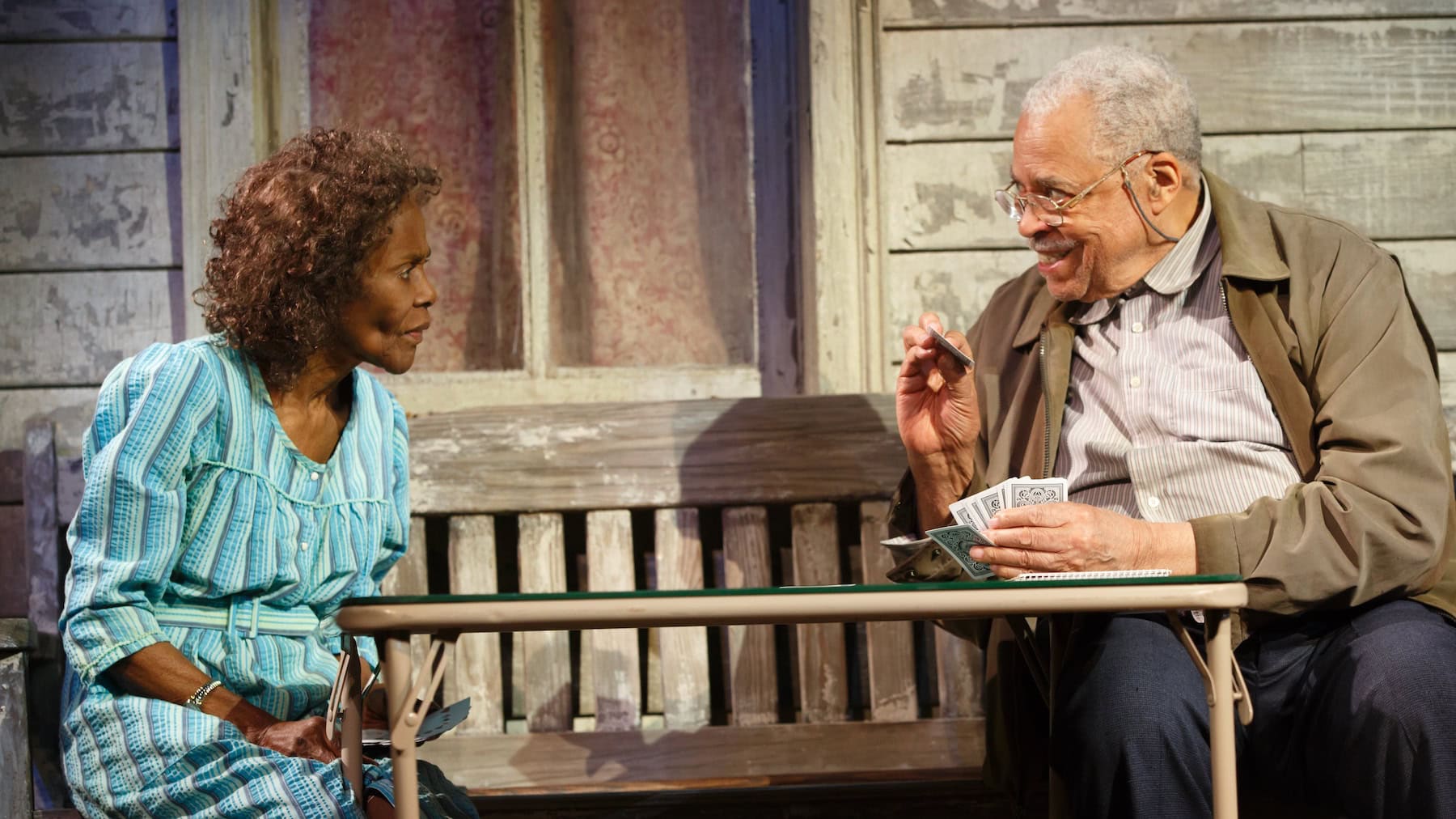
2015 Broadway production of The Gin Game (Joan Marcus)
Tomorrow night, legendary actors James Earl Jones and Cicely Tyson will light up Broadway as they open the current revival of The Gin Game (US/UK). This marks the third time that this Pulitzer Prize-winning play has played the Great White Way, and audiences are just as enthralled as they were during its 1977 premiere. Courtney Kochuba, our Breaking Character Editor, sat down to chat with D.L. Coburn, the play’s author. Take a read to learn about the play’s journey, why this story continues to resonate today, and how Broadway still dazzles him.
I have to start by saying that our timing is pretty fortuitous. It was 38 years ago this week that The Gin Game opened on Broadway with Hume Cronyn and Jessica Tandy. And now, the second revival is playing at the exact same theater (the Golden) and opening on October 14.
It’s really quite wonderful. It’s been a journey because we [Bill Haber/Ostar Enterprises] have been working on this for some time. It takes a lot to put together a Broadway show, meaning everyone’s schedules and getting a theatre. My gratitude will always be there for Bill and Ostar for this – and for getting great stars.
Which you definitely have with James Earl Jones and Cicely Tyson. When did you first hear that they might be up to play the parts?
When it all started for me was about three years ago when Bill optioned the first class rights to the show. At that time, James Earl and Cicely were mentioned… but then you have schedules. Both of these actors are in demand, and their dance cards are full. But Bill persevered.
And here you are! The two of them look like they’re having a wonderful time. We especially love the videos that have been shared on Facebook. Their energy and chemistry is so tangible.
And that’s coming across the footlights, for sure. The audiences are responding so enthusiastically. They just jump to their feet. It’s a terrific thing to experience.
Actually, on that note of experience, this is your third time on Broadway with this show. So how have you been approaching rehearsals, opening night and such? Is there a difference from past productions?
Yes, I actually haven’t been as involved in this specific production. I was there for the first week of rehearsals and previews, and I made notes and gave my observations. So I was involved to that degree. I was far more involved with the first production with Mike Nichols. We rehearsed up in Purchase, New York. The rehearsals were in this large room in a local library. Hume and Jessie had a beautiful home up there and I stayed as their guest. So it was a close group.
It sounds like a lovely group of people.
Well, every production has its own personality, because you’re bringing entirely new people to this play and these roles. So each time it’s going to be different just because you’re dealing with the dynamics of different personalities.
This time, for me, there’s the matter that this play has been produced around the world and in different cultures. We’re currently under contract in Beijing, and I have posters from Japan and all of the European countries. So it’s been active in the world repertory and as a consequence, I have to take a step back and just let the process take place with new people, new directors and new ideas.
It’s terrific that so many audiences are getting to experience this piece. Do you remember what the reaction to the original premiere was like?
The reaction from audiences has always been enthusiastic. Hume and Jessie played The Long Wharf before Broadway, and it was the first time that they were before an audience. I was there with Mike, and when the curtain came down, people stood up. I saw a guy shout, “Bravo!” Others joined in, and Mike turned to me and said, “They don’t shout ‘bravo’ for comedy.” That was a really important statement because, well, there’s an arc to this play. It gets dark. But it’s funny throughout. And what Mike was saying is that the darker elements are coming through.
I definitely agree with that. I read the play for the first time over the summer, and it really spoke to me because of some things going on with my grandparents. The core content of the play has held up over almost four decades. It’s still incredibly relevant to audiences today.
That’s an interesting observation because there was a commemorative reading [of the play] at the Dallas Theater Center, produced by their Theater Guild. The theater’s Artistic Director was there and said, “I’m amazed because this is as current today as it was when it was produced in 1977.” And you’re making the same comment, so that’s a very good thing.
And, you know, in terms of interpretation, Tony Randall actually invited a group of high school students to the first revival in 1997. And I thought, My goodness, high schoolers at The Gin Game? How will this work? But afterwards, we had a talkback. And I was amazed because those kids had such a response to it. One of them asked me if the play was a political statement about the treatment of people who are aging, and I responded that that wasn’t my intent in writing it. Certainly it’s embodied, but this is just a conflict between a man and woman. Then Tony stood up and said, “Well I disagree. It is a political statement!”
I love that!
So, many people will take many different interpretations away from it.
Now, the show opens on Wednesday. Is there anything specific that you’re looking forward to?
I’ve already had an idea of what the feeling is like, because of going to the theater for previews. Coming out, walking back to the hotel through Times Square. You have the unbelievably dazzling lights and all of the excitement of New York. And the thought that this is kind of the center of the universe. You see people there from all over the world. The world is coming together in Times Square every night.
And there’s a marquee up there with my name on it… it’s just astounding. It’s a very profound realization of how much that means. It’s a great deal to be honored in this way.
To license a production of The Gin Game, visit Concord Theatricals in the US or UK.
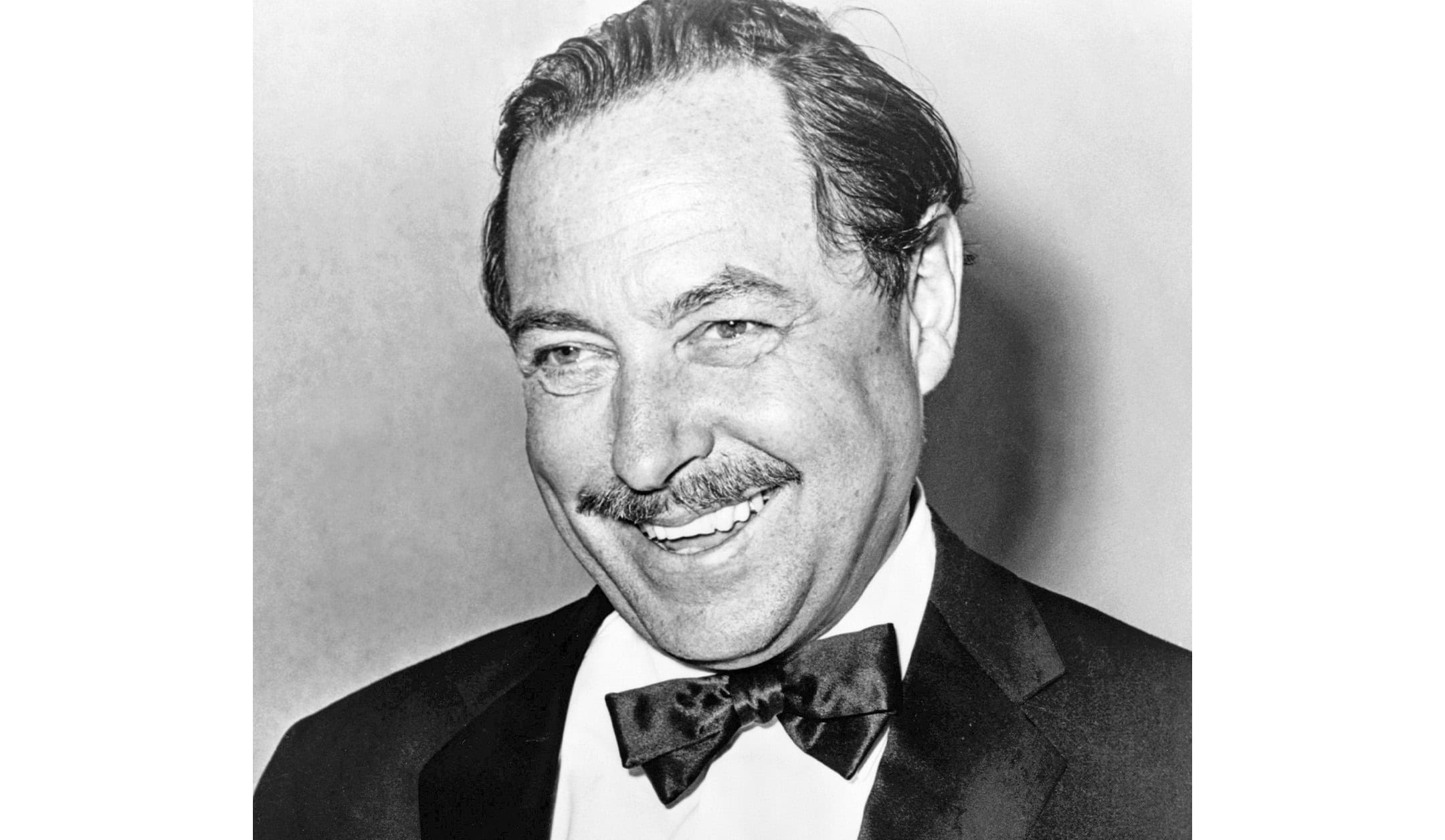
Tennessee Williams in Five Plays
Tennessee Williams has a decades-spanning legacy of incredible plays with complex and challenging roles for all actors, but especially leading ladies. Discover more about an American master with this sampling of five plays.

Newly Available for Licensing – March 2026 (US)
It’s a lucky month! Check out these titles, newly available as of March from Concord Theatricals in the US.

Newly Available for Licensing – March 2026 (UK)
Spring forward with some stellar new shows! Check out these titles, newly available as of March from Concord Theatricals in the UK.